

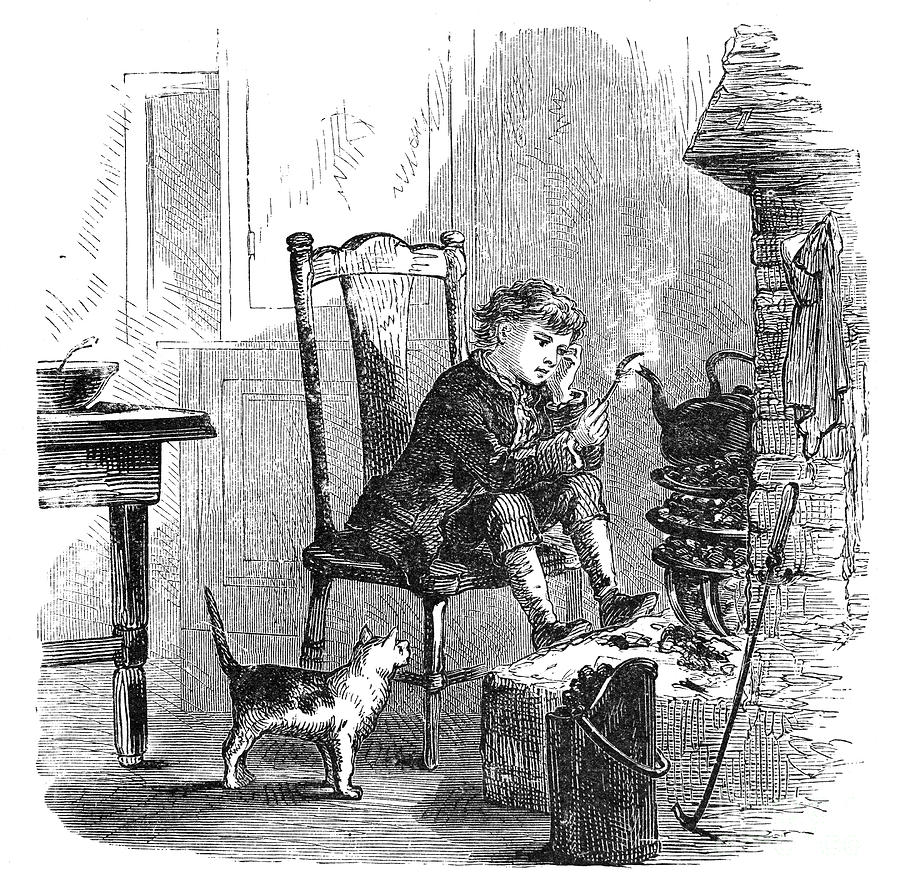
Did it really have to be like this?
Imagine that Mother Watt had just clipped young Jimmy’s ear and told him to leave her kettle alone and get out from under her feet.
We are all too aware of what happened as a consequence of working out the potential power of steam – it’s all around us.
And look where it got us.
So what did James Watt ever do for us?
Naomi Klein, in her book ‘This Changes Everything’ is clear on this point: “Just as Watt’s engine promised, they produced power wherever and whenever their owners wished – the ultimate non-reciprocal relationship.”
Until now.
Klein goes on to say: “the illusion of total power and control Watt and his cohorts once peddled (over Nature) has given way to the reality of near total powerlessness and loss of control in the face of spectacular forces as Hurrican Sandy and Typhoon Haiyan.” Published six years ago, they are now many more instances of ‘spectacular forces’ that could be added.
Here’s our problem. – and its a big one.

James Watt’s steam engine first saw the light of day (and what gorgeous daylight it was) in 1776, which coincides (not accidentally) with the starting point of this graph, that demonstrates grimly the effect of burning fossil fuels since that time.
That great singer songwriter, John Tams, describes coal mining as ‘digging ancient summers, bringing in the fiery sheaves’ . . . and returning all that locked-in carbon to the atmosphere in the process.
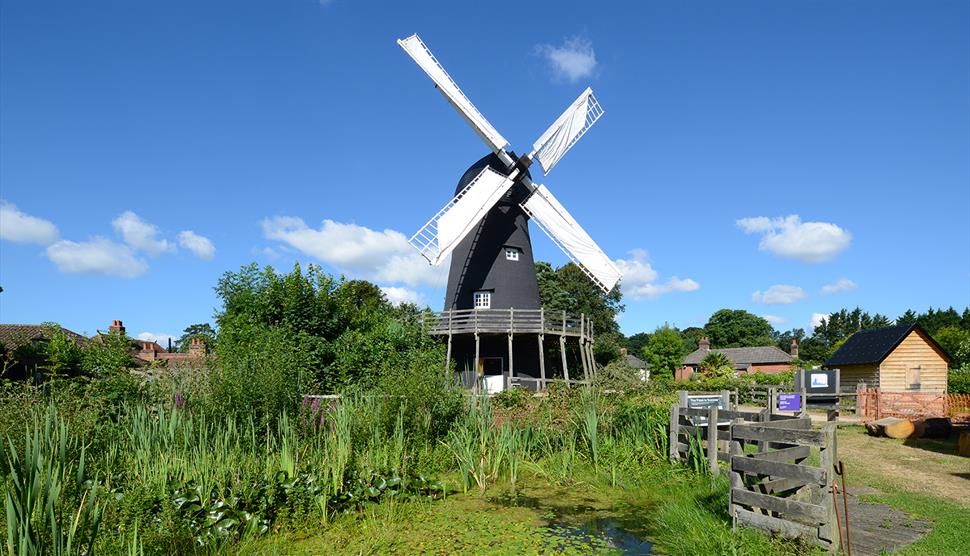
Before Watt’s steam engine took hold, industrialists had to find their power source where Nature put it – along waterways and on hilltops. The sky was clear and blue and people’s lungs were unpolluted. Within a century, the landscape was changed beyond recognition. And the engineering material of choice – was wood (unless you were a blacksmith).

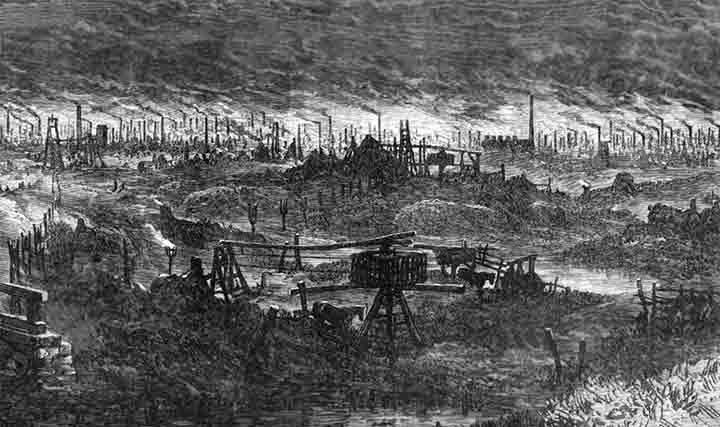
What came after, and celebtrated as a great Thing was, of course, The Industrial Revolution. A piece of doggerel from my home area of the Black Country; “The devil stood on Brierley Hill and all around him gazed; I never more will be at Hell’s fierce fires amazed.”
There’s a statue to James Watt (and his cohorts) in Broad Street, Birmingham, Its known locally as The Golden Boys. Watt is explaining his latest improvements to Matthew Boulton and William Murdoch. Boulton was Watt’s partner in the Boulton and Watt company, that installed steam engines all around the country, Murdoch also worked for the company. Incidentally, he is also credited with developing gas lighting, and the term ‘gasometer’ was down to him. Gasometers . . . remember those?
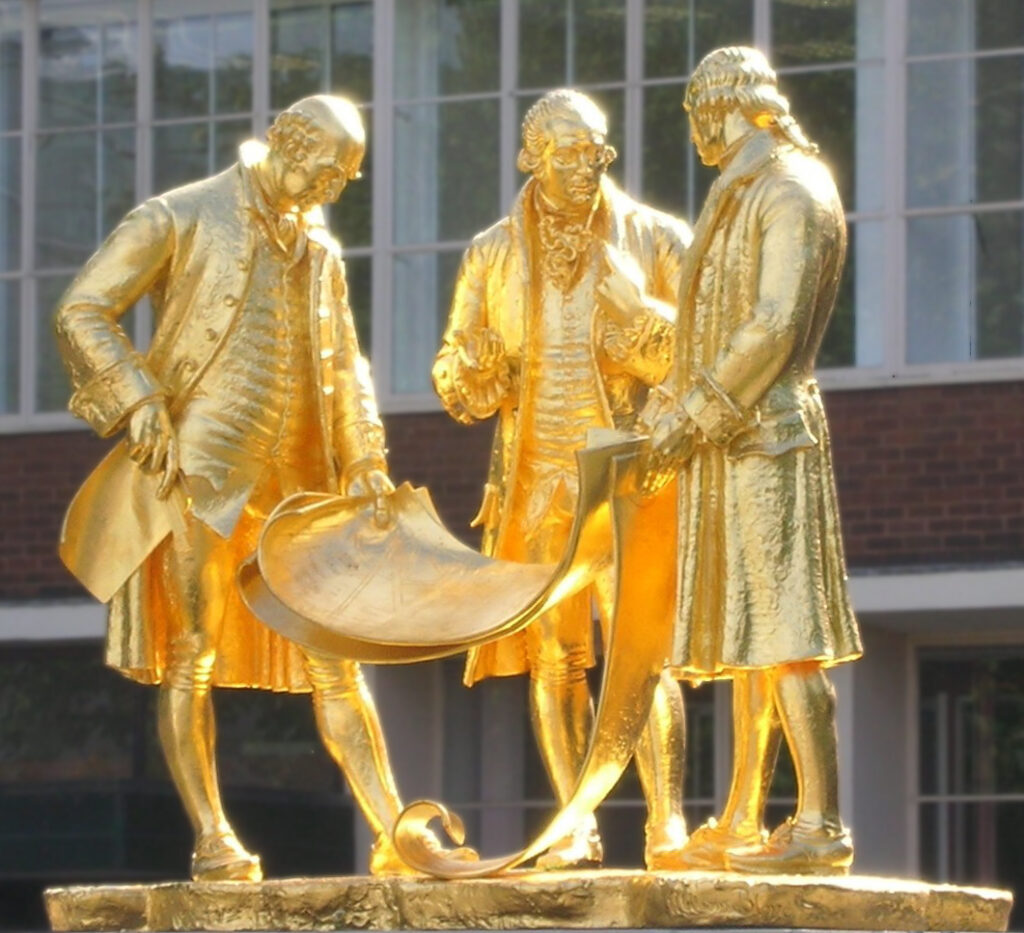
Am I the only one to see the irony in the juxtaposing of a gilded statue honouring the man who devastasted the natural environment. But then, Watt did say:
“Nature can be conquered; if we can but find her weak side.”
It appears now that Nature was just biding it’s time to see if were serious about this dangerous nonsense.
Unintended Consequences
At the time of writing (June 2020) there is a heatwave in Siberia.
On the eve of the Summer solstice, and for the first time in recorded history, temperatures reached 38°C (101°F) in a remote Siberian town – 18°C warmer than the maximum daily average for June in this part of the world, and the all-time temperature record for the region.
New records are being set every year, and not just for maximum temperatures, but for melting ice and wildfires too. Melting sea ice is raising the temperatures in the regions; higher temperatures are melting the permafrost; the thawing is releasing methane that’s been trapped in the permafrost for thousand of years. Methane is a dangerous greenhouse gas, 28 times stronger than carbon dioxide.

.
Let’s finish this divertissement with Douglas Adams: natural philosopher de nos jours:

“This planet has, or had, a problem, which was this. Most of the people living on it were unhappy for pretty much of the time. Many solutions were suggested for this problem, but most of these were largely concerned with the movements of small, green pieces of paper, which is odd, because on the whole, it wasn’t the small, green pieces of paper which were unhappy. And so the problem remained, and lots of the people were mean, and most of them were miserable, even the ones with digital watches. Many were increasingly of the opinion that they’d all made a big mistake coming down from the trees in the first place, and some said that even the trees had been a bad move, and that no-one should ever have left the oceans.”
.