

.
A howl of anguish from an old friend who’s being asked by a contractor to match the performance figures provided in a consulting engineer’s specification. Everything goes swimmingly until we get to the box that says LOR – and the figure inside the box: 165%. Checking on the other luminaires in the schedule and, yes, every fixture is given an LOR well in excess of 100%. How can this be?
.
What nonsense is this?
But first – can it be true??
.
In this age of relative truths and bare-faced porkies, it’s sometimes difficult not to believe your own senses – your own experience – the immutable rules of the known universe. So let’s tread carefully, just in case a very clever manufacturer has worked out how to get more photons coming out of a luminaire than are actually being produced inside the luminaire.
Let’s go back to basics, zen walking on rice paper the while . . .
.
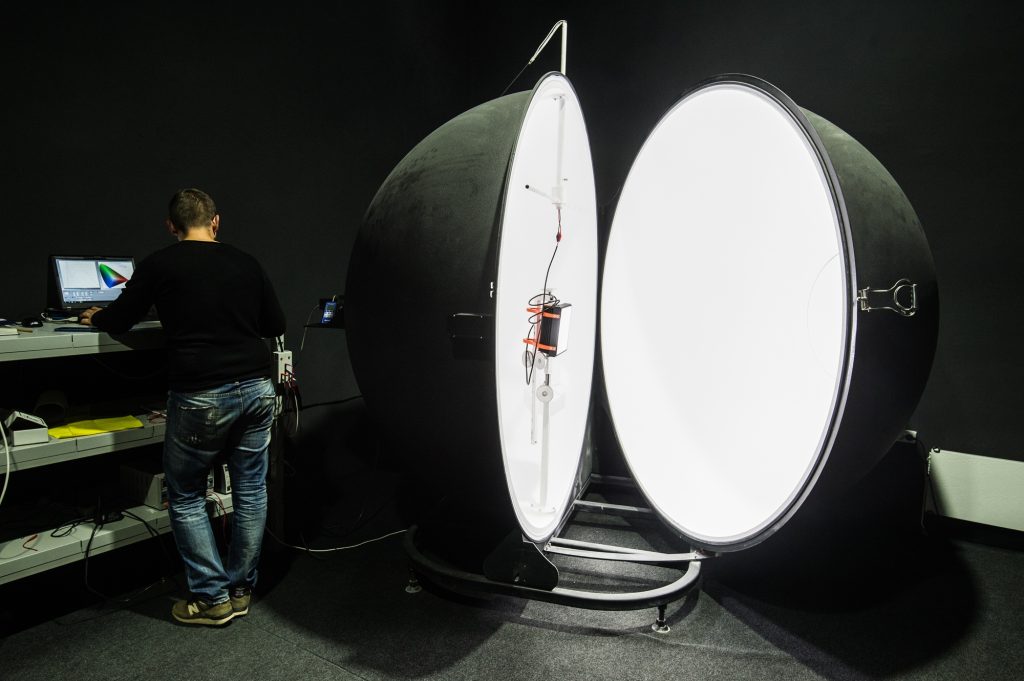
A luminaire’s Light Output Ratio (LOR) is the number that tells us the difference between the measurable light output from the luminaire, divided by the measurable light output from the source within that luminaire. Two simple numbers; one simple ratio.
Google’s AI Overview is absolutely clear: Light Output Ratio (LOR) is a measurement that expresses how much light from a light source actually makes it out of a luminaire. So we can put this one to bed straightaway: you can’t possibly have an LOR greater than 100%.
Everyone happy with that? And – in the way of a by-the-way – does everyone remembers the hoo-ha when LED manufacturers first started to claim LORs of 100% because the chip was both source and optical controller?
So, I say again: YOU CAN’T HAVE AN LOR GREATER THAN 100%. Nowhere in the known universe is this possible. (and don’t get me started on the outlier that was the fluorescent T5 lamp – I have my answer to that if you really want to hear it!)
.
So – next question: where does the 165% figure come from?
If you take the road marked ‘Uncertainty’ it’s inevitable that you’ll come to the forlorn settlement of ‘Ignorance’ before too long, as sure as eggs is ovoids. And if you don’t understand what Light Output Ratio actually refers to, apart from its something to do with ‘efficacy’ then you are a single step away of making a complete fool of yourself.
I did the obvious thing and went into the manufacturer’s website and checked through the relevant datasheets – and there it was, all along. Its not LOR, because it couldn’t be – but it COULD be lumen efficacy, measured in Luminaire Lumens/Circuit Watt. And so it was. A call to said manufacturer confirmed it – amid general consternation that someone so ignorant could be allowed out to unleash potential commercial carnage.
Because the thing that bugs me is the potential for reputational damage that runs alongside the inexperience/foolishness/idiocy. My good friend who started this off was looking at a luminaire schedule of fixtures from a known manufacturer, complete with product references and technical information, all of which was correct, except for the LOR rating.
It’s the kind of error that puts the onus onto the recipient of the information, rather than the creator of the information. How many others will look at LOR:165% and take that as the true figure to better when looking at possible alternative fixtures? When will the penny drop?
And will be be the right penny?
..

A warehouse installation where none of the fixtures have an LOR greater than 100%, regardless of how bright it looks.