


When Lighting Codes and Standards Turn Into a Tick-Box Exercise
I have been reading, referencing, and working alongside lighting codes for the whole of my professional life, back to the days when the Illuminating Engineering Society was primarily concerned with providing enough light to stop factory workers sticking their fingers into moving machinery. I have never had a problem with that. What has made me seriously grumpy this week (or as Chris Fordham prefers to call it, descending into full “gruffery”) is what happens when well-meaning industry guidance gets hijacked by bean counters, number crunchers, and software-wielding gatekeepers who skip straight to page 84 just to put a number in a spreadsheet box. When a guidance document written by our friends at the SLL or the ILP is treated as a rigid commercial algorithm by people who have never read page one (let alone understood what a hundred lux actually looks like in a real room), good lighting design gets strangled by a tick-box exercise.
And lighters all, the problem cuts both ways… whether you are trying to deliver diffuse vertical illumination for circadian entrainment in a care home and running headfirst into a blinkered reading of Building Regulations Part L, or trying to explain why BS EN 12464 says an office full of hot-desking laptops needs different light for an old timer like me than it did for the twenty-four-year-old students who set the original benchmarks. Chris and I set out to have a therapeutic rant about the perversion of lighting standards, how a lighting guide is a bit like a 50,000-piece barbecue instruction manual, and why there is never a tick-box marked “deviation”… before managing to turn our entire argument on its head on a London Underground platform. So how much respect do our lighting codes really deserve, and how do we get the box-tickers back in their box??
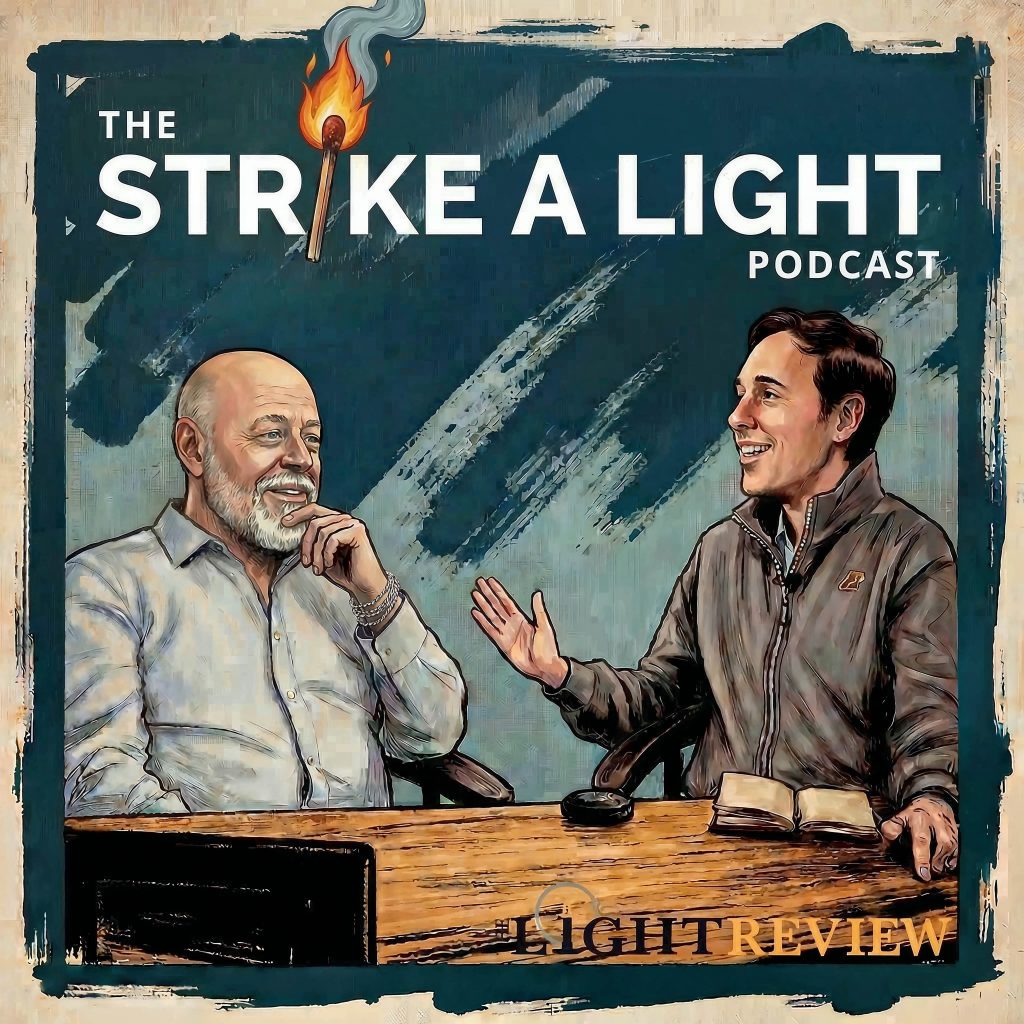
Podcast: The Strike a Light Podcast
Hosts: John Bullock & Chris Fordham
Produced by: Duncan Smith for The Light Review
Episode: 18
Episode Introduction: “Hello and welcome to this Strike a Light podcast with me Chris Fordham and my good friend John Bullock, and that’s how he introduces me so I thought I’d do the same to him. Today we are looking at codes and standards and how much respect we give to them.”
Episode Summary
Are lighting codes and standards protecting good design, or are they being weaponised as a mindless tick-box exercise? In Episode 18 of the Strike a Light Podcast, John Bullock and Chris Fordham debate the vital difference between statutory regulations and industry best-practice guidelines, and why the people policing the numbers on projects rarely read the guidance they are enforcing.
From meaningless tender metrics like watts per square metre per 100 lux to the clash between Building Regulations Part L efficacy targets and circadian lighting in care homes, John and Chris explore what happens when software algorithms replace lighting expertise. Along the way, they examine why BS EN 12464 demands lighting for real people rather than imaginary averages, why visually impaired passengers on Tube platforms prove that standards still save lives, and how an honest upfront conversation with the client can legitimise design deviations before building sign-off.
Key Takeaways You’ll Hear in This Episode:
- Guidance vs Gatekeeping: Every SLL and ILP lighting guide begins by acknowledging creativity and aesthetics, yet project gatekeepers routinely ignore the first eighty pages to enforce a single table number as a commercial requirement.
- The Nonsense of “Watts per Square Metre per 100 Lux”: Why reducing a building’s lighting performance to crude spreadsheet ratios fails when the people demanding the figure cannot explain where or how that illuminance is measured.
- The Circadian and Part L Catch-22: Why care homes (classed as commercial buildings under Part L) struggle to meet crude luminaire lumens-per-circuit-watt targets when using the diffuse Lambertian luminaires required for vertical circadian light in the eye, and why LENI is too often ignored.
- Hot-Desking, Post-COVID Offices, and BS EN 12464: How modern laptop working has blown apart traditional office lighting assumptions, and why “sufficient and suitable” lighting must adapt to older eyes rather than twenty-four-year-old test averages.
- Turning the Argument on Its Head: Why a London Underground platform edge needs uncompromising contrast for visually impaired passengers, proving that the real enemy is not the lighting code itself, but lazy stock responses that ignore human visual needs.
The Bottom Line
Lighting guides exist to support designers, not to replace them with a spreadsheet. Whether you need to drop below a standard metric for atmosphere and circadian health, or push illuminance higher to help visually impaired users navigate safely, the solution starts on day one: sit down with the client, define the parameters, and document every deviation from the standard upfront so the box-tickers have nowhere to hide at sign-off.
🎧 Listen to the full episode above to hear the complete breakdown!
Don’t miss an episode!
If you enjoyed this candid look at lighting codes and standards, make sure to subscribe to the Strike a Light Podcast wherever you get your audio.
For more honest, expert insights into the lighting industry, visit The Light Review Online.
About the Hosts