

..

.
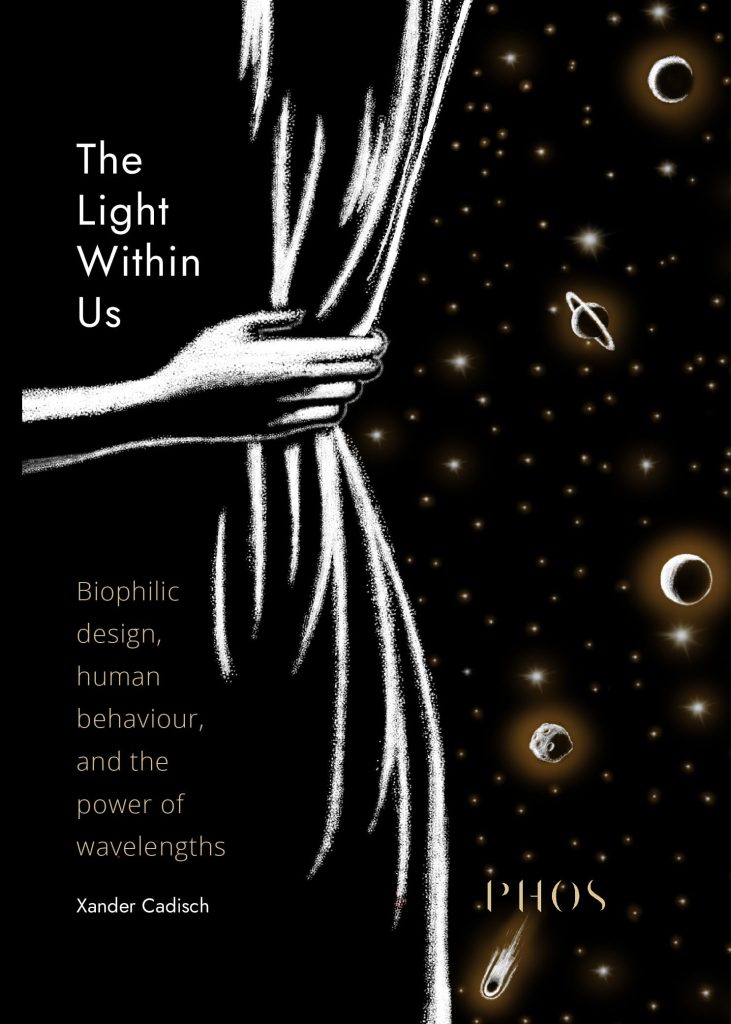
Xander Cadisch offers up a portentous title for his long-awaited view into the world of Light and Lighting. It is, however, one of the few occasions when hyperbole turns out to be the Real Thing. The Light IS within us.
.
.
Xander has done us the favour of not presenting the book as a straight narrative – my college text book was Lamps and Lighting, by Henderson and Marsden and it did not make for a comfortable read. If you’re offering us facts – just give us the facts; we can join the dots between.
The Light Within Us is full of the kind of ‘did you know’ information that will probably alienate you from your workmates, so best to get through it and then offer it round for them to find out for themselves.
But here’s a few words of warning; while it carries a lot that is of value in a strictly agnostic sense, it also has a lot to say about its parentage. Phos put in a lot of effort during the pandemic lockdown periods to keep us interested and aware, while our noses were pressed to the window panes that came to represent the extent of our lives. Their podcasts instigated The Light Tribe in the process, though I haven’t noticed any studded leathers with The Light Tribe across the back – but then, I probably don’t walk those mean streets.
Of the five sections of the book, Phos is front and centre only in section 5, so the company marketing doesn’t get in the way of the Matter Of The Book (though there’s never any doubt who published – and paid for – the book itself. But to balance the commercial leverage, Xander has recruited some heavy hitters from the Light Within Us community, with particular thanks being offered to Dr. Shelley James and Prof. Russell Foster and this opening quotation from Stephen R. Kellert of Yale University.:
“We will never be truly healthy, satisfied, or fulfilled, if we live apart and alienated from the environment
from which we evolved.”
.
Now that’s an observation of great depth, but I can’t help feeling that Kellert is using the wrong tense. ‘. . . from which we evolved’ has a grim finality to it. I would prefer . . . in which we continue to evolve’. Maybe catastrophic climate will speed our evolutionary process along a bit faster. And where’s the harm in that?
Back to the book:
Section 1 takes us into the bosky philosophy of biophilic design – and I was sufficiently exercised to change my plain blue screen wallpaper to a sunlit woodland – thanks Xander!
Section 2 reminds us where we, and our eyes, came from, taking in the circadian process and the vital importance that sunlight has on our lives. There’s an awful lot to digest in this part of the book, so best to approach with a nice hot cocoa and some decent bedsocks. Because you’ll be there for some time – just thinking about what it all means for us. It’s worth the ponder.
Section 3 does a deep-ish dive into biophilic design principles, referencing the work of Terrapin Bright Green, For sure, the best way to approach Biophilic Design is to have some kind of template to follow. Terrapin’s 15 patterns (or 14 according to their website . . . maybe they found a new one for the book -or else their web designer prefers the slower approach to everything – and that’s a very biophilic approach to life. So maybe they’re just practicing as they preach and looking for us to join them. Slow book reviewing – what’s not to like?
Section 4 presents us with a cavalcade of excellence, from Speirs & Major; dark source; Hoare Lea, Oliver Heath Design; and ‘trailblazing Lighting Artist, Frankie Boyle. We know that we’re in good company here; and Xander also knows that he’s in good company.
Section 5 hit my ‘Don’t dare try and sell me stuff’ button, I’m afraid. So there’s not much of my DNA lodged in those pages, which is a pity because that’s where Xander has secreted the stuff about Circular Design and Phos’ work with B Corp. That stuff really deserves its own section – even if, for the strict pedants (whoa – surely a tautology there, Mr.B), it’s off topic, there are those of us who would suggest the future of our civilisation probably depends on an almost biological/evolutionary approach to energy and materials technology.
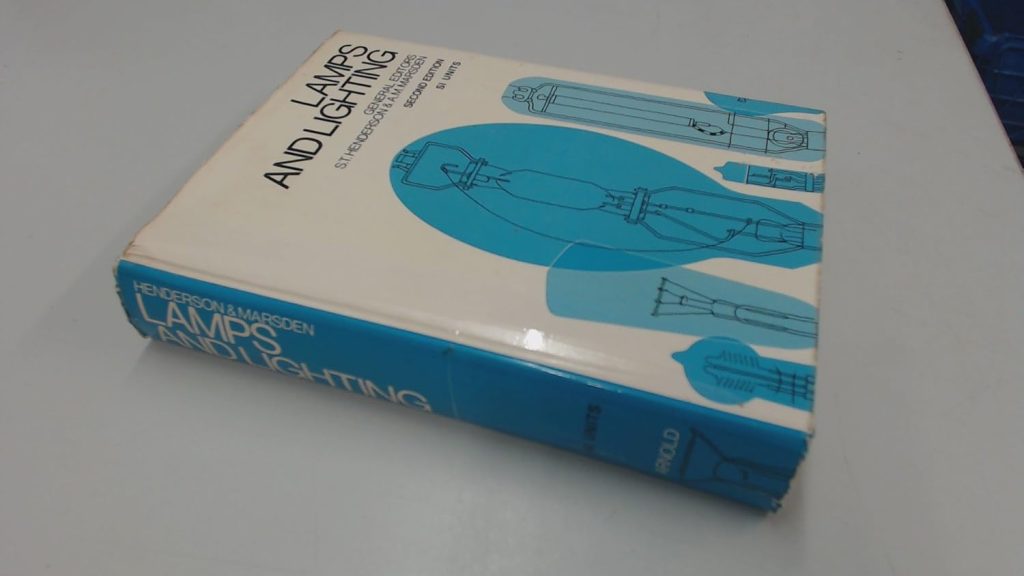
.Finally, a small cavil (Oi! Tautology again. Stop it – that’s quite enough with the adjectives!) that will only get larger the longer that this book sits on my shelf. If I still had my 1972 copy of Lamps and Lighting it would be reduced to the role of historic curio; there’s no mention of compact fluorescent lamps; SELV tungsten halogen; ceramic metal hailde; and – oh yes – the LED. All of those merely a twinkle in the scientists’ eyes.
A book reduced to a nostalgic sigh. This is what will happen to The Light Within Us.
Already, the human science angle is missing any mention of Near InfraRed and its impact on mitochondria – the energy exchange that keeps us alive. Its not Xander’s fault that he doesn’t have a crystal ball to predict what comes next. It’s the old ‘End of History’ syndrome; so don’t ever think that you’re written the definitive work, because you can be sure that what you’ve actually done is to provide an interesting diversion on the road to redundancy . . . or a second edition!.
But , we are where we’ve been and for that, Xander, we thank you!
.
.
.