

.
Is it my imagination, or are we approaching a time when we care more about the welfare of small mammals than we do about our own species? And why did that come out sounding a bit more anti-woke than I intended? Maybe that’s part of the problem; we humans are so easier to con out of our own basic safety needs. We’ll even vote for it . . .
But here’s the thing . . .
‘Emergency routes and exits must be indicated by signs; and emergency routes and exits requiring illumination must be provided with emergency lighting of adequate intensity in the case of failure of their normal lighting.’
And if anyone breaches the Regulatory Reform (Fire Safety) Order 2005 they are liable to be fined or locked up. Serious stuff.
‘. . . makes it illegal to kill, injure, capture, or cause disturbance that affects populations of bats, obstruct access to bat roosts, or damage or destroy bat roosts.’
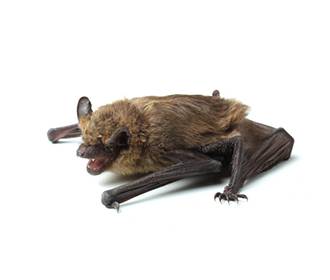
The international protection (the EC Habitats Directive) has been transferred into national laws by means of the Conservation of Habitats and Species Regulations 2017. And if you do bad things, its fines and prison again.
On the face of it, both humans and bats (specifically) are protected by rule of law, but when was the last time you saw a planning application turned down because the emergency lighting scheme wasn’t up to snuff? Whereas . . . when was the last time you didn’t see a demand from the planning department for detailed information on the impact of local bat populations?
And the differences between these two life-protecting pieces of legislation only broaden from here.

Emergency lighting, lest we forget, is an essential component part of a fire and life safety strategy, but many people who undertake emergency lighting design have no formal – or informal, come to that – training to design such vital infrastructure. This is real. We’re hearing about building managers being advised incorrectly on emergency lighting measures by lighting professionals who seem to have little knowledge about the details of the legislation . . . a very good example of a little knowledge being a very dangerous thing.
But anyone can do it – and no one ever checks.
Protecting bat populations starts with an assessment that bats are actually present. Having confirmed that, planners will ask for details of existing lighting and whatever changes are proposed to the location. And as well as any exterior lighting, this also includes an assessment of light spill from inside planned buildings – that is to say, the buildings that haven’t been built yet. And once you’ve done that, be aware that there isn’t really a standard for lighting around bats; it all comes down to what’s going on at the specific site.
Not easy – not cheap – not avoidable.
I don’t think that I’m asking for less care being taken over our bat population – as well as all the other species that are impacted by our lighting work . . . but I AM asking for more concern to be shown over the application of emergency lighting in our buildings.
The key word is COMPETENCY. The issue is, how do we ensure that we have it? One of the anticipated outcomes of the Grenfell Inquiry will be the requirement that Core Competencies will be required in design processes. It is likely that emergency lighting will fall under that requirement. Let’s get ahead of the legislation on this one and get the paperwork sorted. every lighting design studio – emergency competent!
.
FYI: A good starting point in gaining competency is via the LIA Emergency Lighting/ICEL Endorsed Courses.
..
.