

.
Its hard to believe that it’s only been one year since the last Clerkenwell Design Week, and haven’t we as a country been busy in this period? When you consider the fact that we have had as many prime ministers in a year as we would normally have in twelve, I feel the need to re-calibrate my brain for the sake of my sanity. When I wake up and read that everything is normal on the online news…. It’s a bit of a surprise and relief to be honest!
The timing of CDW is ideal, you get the feeling that summer is on its way as you are walking round the streets, with the longer evenings and warmer days giving everyone a little spring in their step, which let’s face it you will need if the products you are looking at are mainly being shown in an 18th century prison, certainly atmospheric and the darkness is perfect for lighting design, but I wouldn’t want to spend the whole three days of the show down there !
.
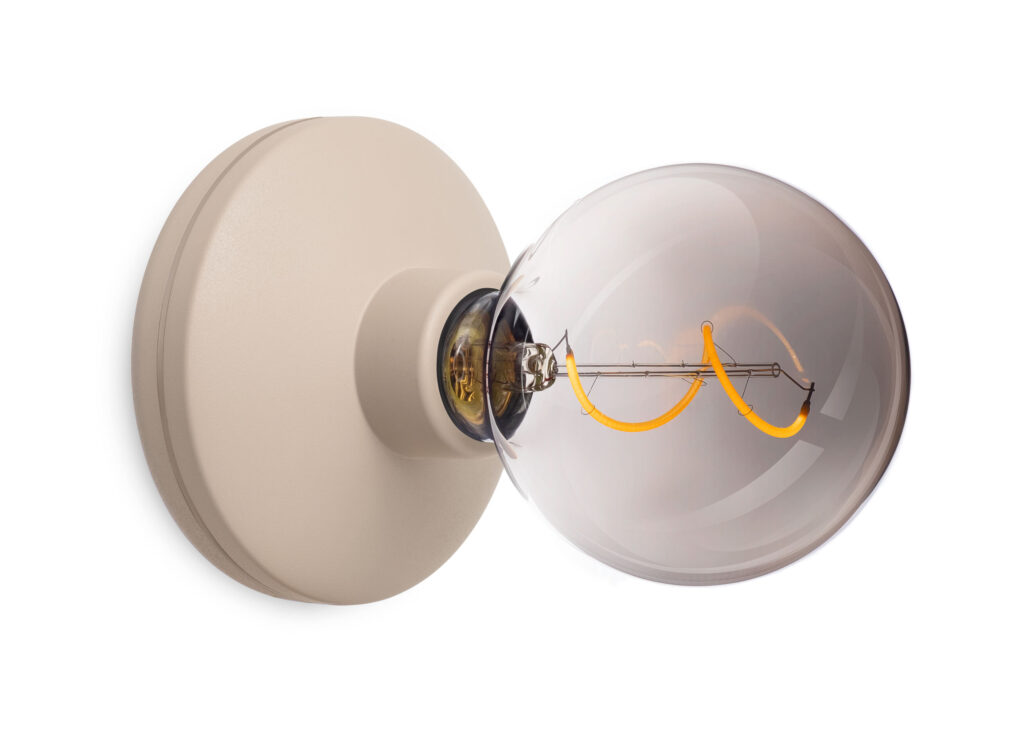
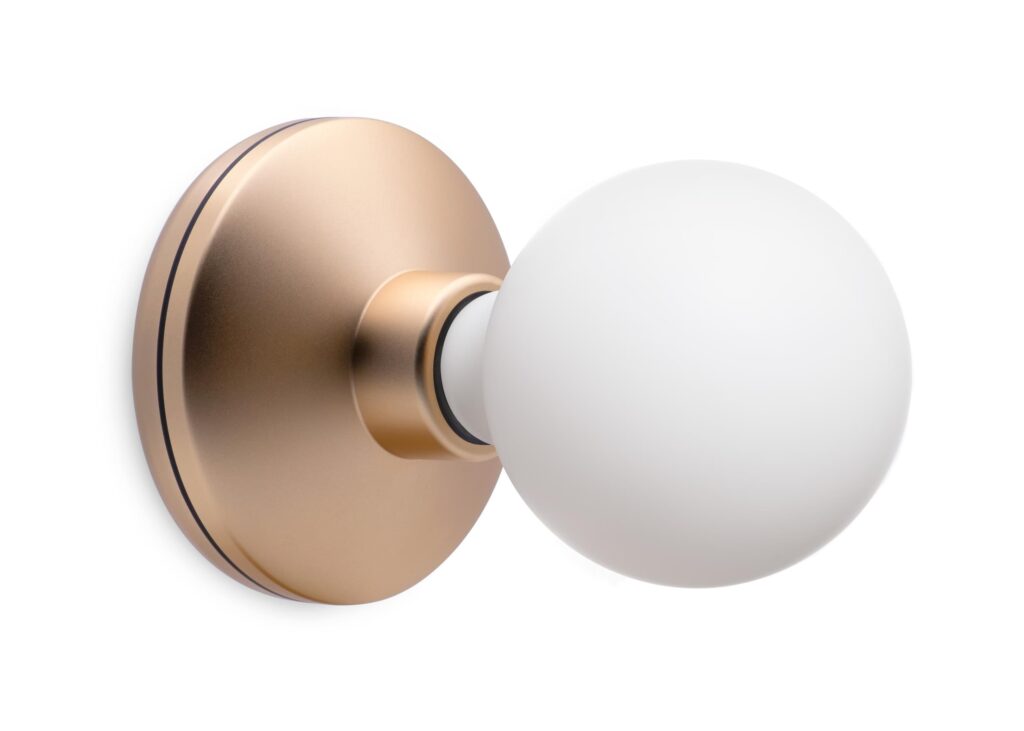
Humble Lights: ‘Bee’.
.These wall mounted lights from Humble Lights look quite neat, but it’s just a lamp, so what’s so interesting about these you say? Well, the beauty of these products lie in the fact that they require no cabling, as they are battery operated. They are suitable for external use with their IP65 rating, and are ‘smart’ lamps, compatible with Zigbee, Hue, Tuya and IKEA Tradfr. In addition to these apps they can also be controlled by touch, for those times where you can’t find that smart phone that’s usually glued to your hand!
Boasting 22 hours of light the ‘Bee’ light comes in two different versions, (shown above) with either a frosted or clear bulb. The mounting plate allows the lamp to be twisted on and off for recharging. Perfect for adding low level pools of lights to gardens, patios etc.
.
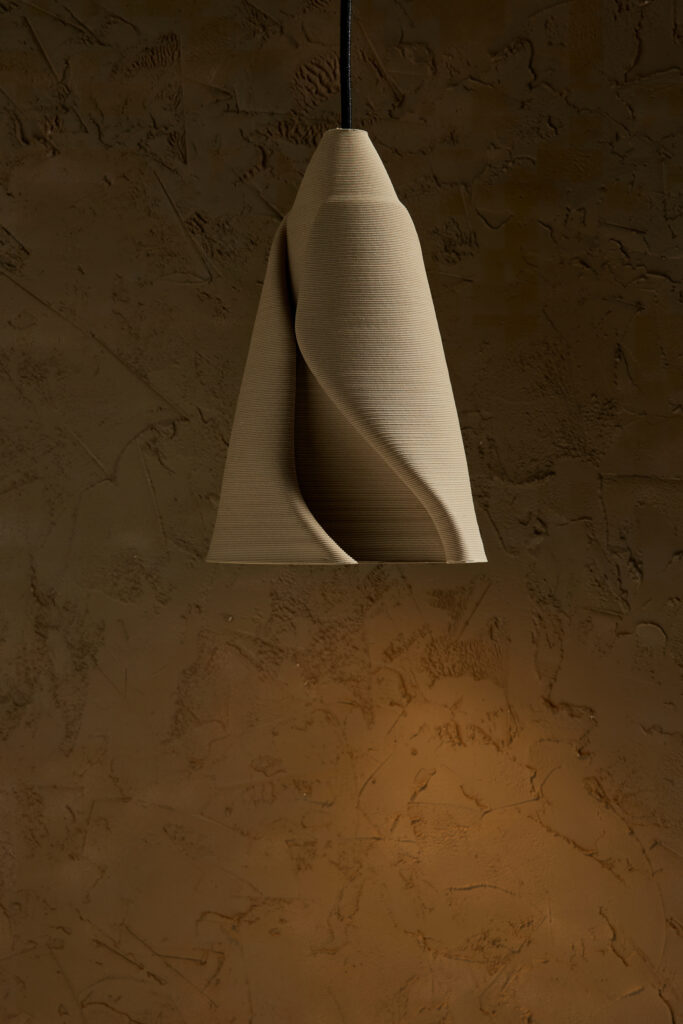
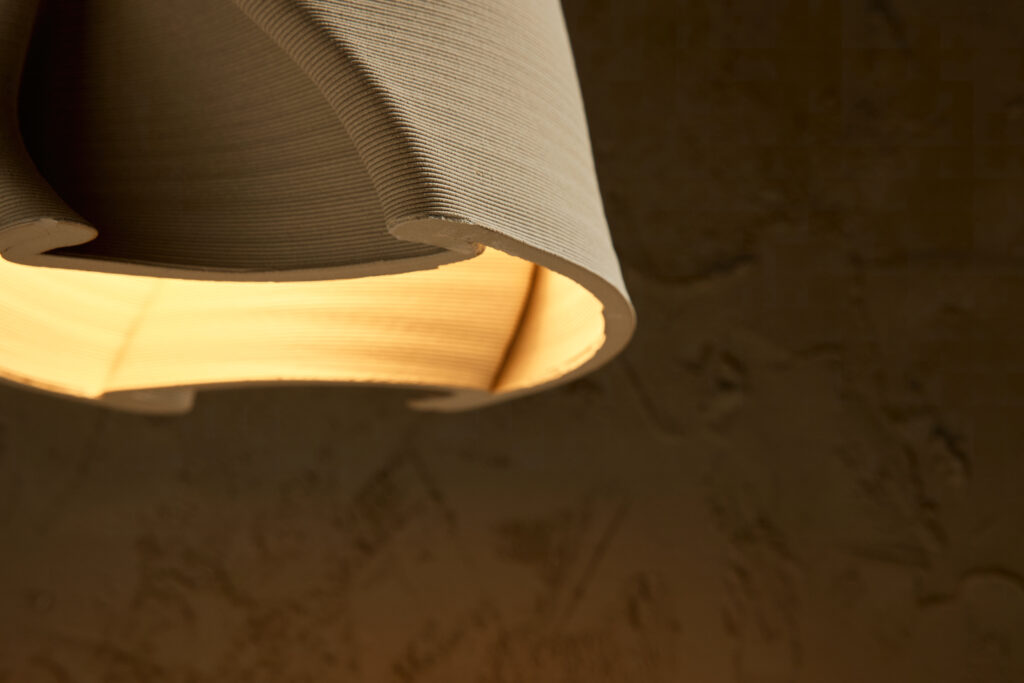
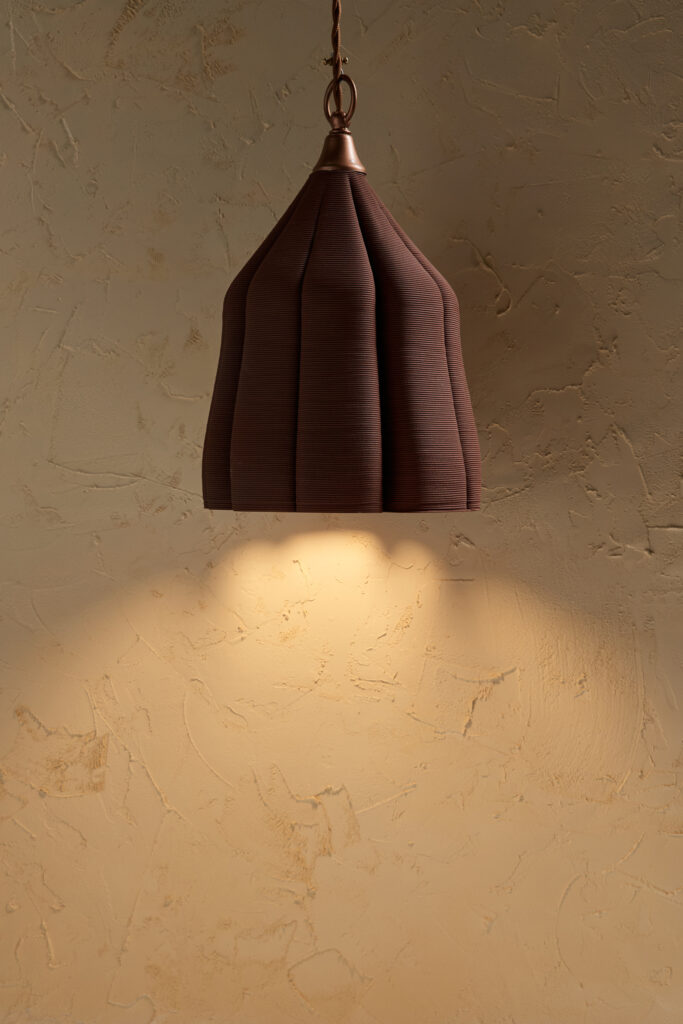
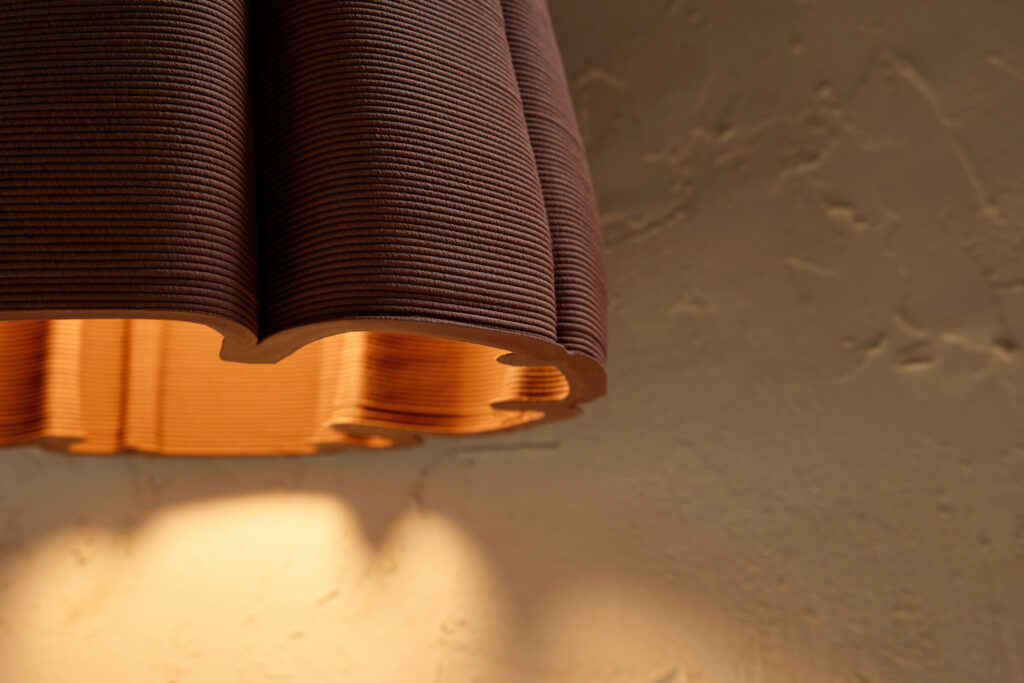
Keramik originally started out as an architectural studio some 15 years ago in London, only recently moving back to Greece to start a new initiative in additive manufacturing (N.B. Additive manufacturing (AM) or additive layer manufacturing (ALM) is the industrial production name for 3D printing). They were keen to develop products aimed at the residential market, hotels, bars, and restaurants when the 3D manufacturer suggested that they could use clay.
Not believing my ears I had to ask the question again as I thought I had misheard what founder Theodore Samaras was telling me, the idea of 3D printing in clay was something that for me didn’t really compute, almost tantamount to modern-day witchcraft! As Theodore kindly told me –
‘We always had at the back of our minds something that was sustainable and eco-friendly, we wanted to redefine an under-recognised material which previously would be associated with several other objects. We reimagined the process a potter would follow, and added new technology, allowing us to explore new forms and complex shapes, inventive surfaces and patterns ’
The two products that in particular caught my eye were the ‘Gourd’ and ‘Flume’ (shown in images here) For all intents and purposes these lamps look as though they are folded fabric, but a gentle tap confirms they are, in fact, made of stronger stuff, the material finish and colour juxtaposes with the light in a way which is most pleasing on the eye, giving a rich warmth.

CURIOUSA is a British lighting brand who are famous for their hand formed, textural and colourful creations. On show in ‘The House of Detention’ was their ‘Wave Chandelier’ a light that has been designed by the brand founder ‘Esther Patterson’ who described her design intent – “It’s important the pieces feel alive and even tactile. Even though I’ve designed a certain uniformity – they needed to feel instinctive, sculptural and free of constraint,”
It’s true that these products have a wistful beauty that fill a space with their form and subtle aesthetic, the colours are bold but not kitsch and as such would make a good addition to most interiors where you want to create a focal point, over stair wells, atria and such.
The product is lit from within by a led strip that is replaceable (you will need to send it back to Curiousa), and power cables are concealed within the shades. Its 12v, and the glass shades are available in twenty different colours. The company uses as much sustainable packing materials as possible, getting rid of all bubble wrap and choosing recyclable materials instead. They also endeavour to use as much recycled glass as is feasible.
.
.
.
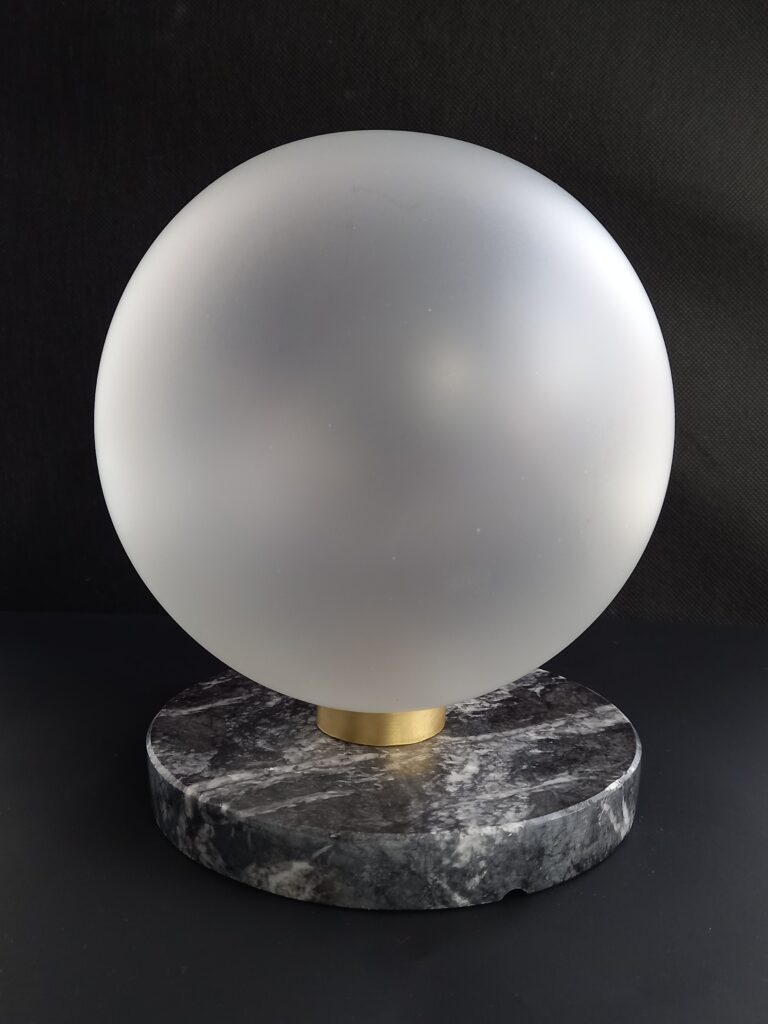
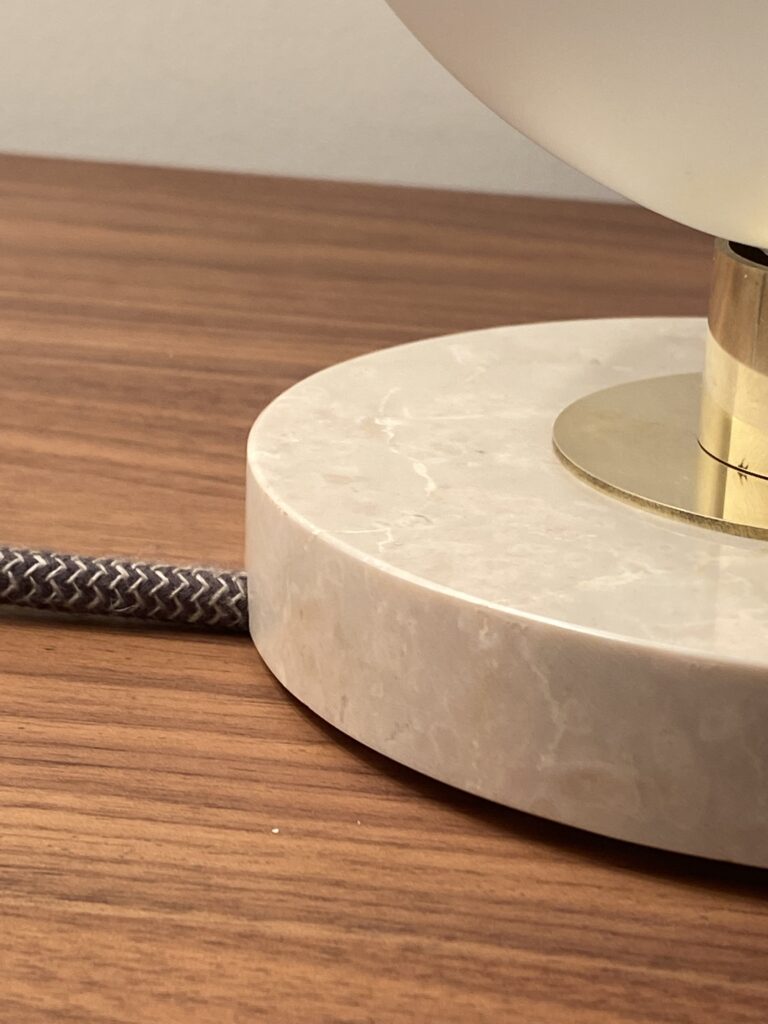
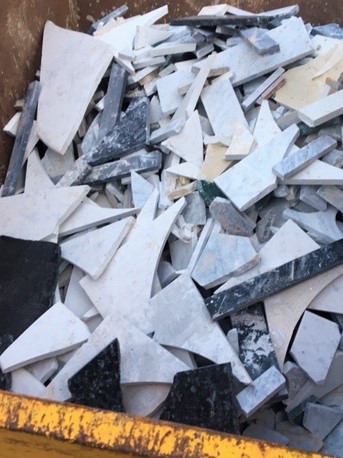
‘Joe Scog’ brands itself as a company with sound engineering principles, and all made in Britain. The interesting element of this table (or ceiling or wall light with a back plate) was the inventive and creative use of offcut materials, sustainable approach to design, coupled with authenticity by the bucketload.
Founder and designer Domenico Scognamiglio gave us an interview at the Fair and had some interesting insights into his product.
‘The lamp utilises a marble base’;marble that is taken from offcuts of the manufacturer of table / kitchen tops, discarded and destined for the bin. At any one time there may be Black, Blue, Alabaster, Murano white, so the customer is able to select their preferred colour from these. I have gone out of my way to source the glass bowls from a blower in Gloucester, utilising four or five colours including opal or clear. The metallic fitment is also available in a variety of finishes, all solid brass turned by a local engineer in Kent.
Sustainability is important to us, and so much waste is produced in packing. To avoid this, we pack our products in mini wooden crates that we make up in the workshop that can be sent back to us, flat-packed for reuse. These are filled with compostable natural hemp from Yorkshire. It matters to me as I got really wound up from the huge amount of waste that I’ve seen a lot of over twenty years of working with companies such as Murano glass – packed in huge boxes with polystyrene chippings that I couldn’t get rid of. I wanted to avoid all plastics and polystyrene.’
The luminaire is a dimmable G9 mains voltage LED and controlled by a touch sensor or switch on the colour customisable cable. The lamp gives a soft diffuse glow, so for my money would be best utilised in an art deco hotel or period property. The form is definitely suggestive of something from this era. The glass is a particular type that can be made thicker, ensuring the product is more robust than, say, a Murano glass bowl.
.
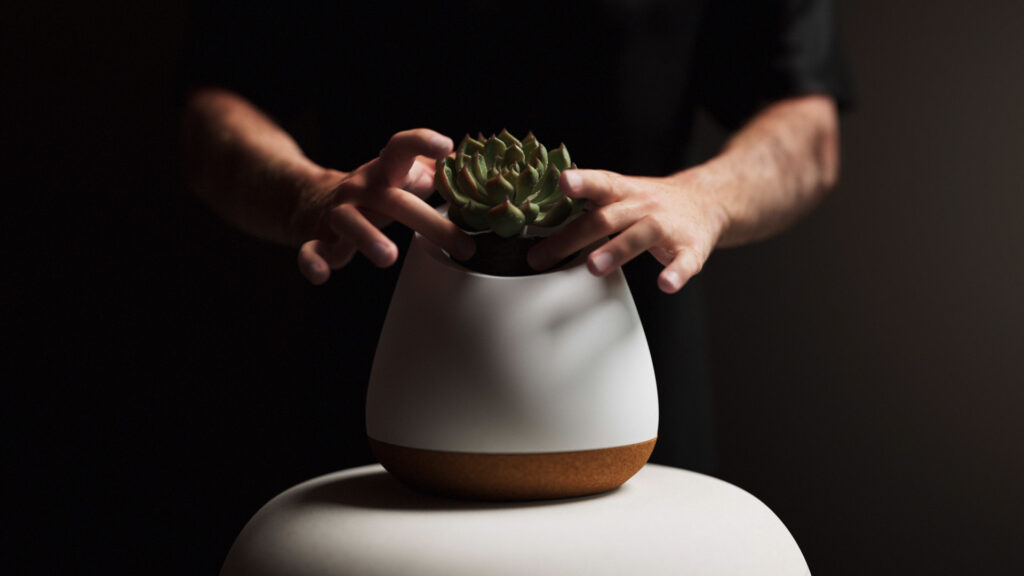

Bioo is a bio tech company from Barcelona, at the Fair for the first time, showing their new table lamp Bioo Lux. A bio-organic light with a plant at its heart.
UK business development manager Aurelie Duran-Blanch gave me the low down on this great luminaire.
‘’We develop technologies that take inspiration from nature, and fusion them, with a view to help create the first biotech cities in the world. This is a product that combines the power of living plants; they act as a biological switch that are able to turn on and off the light.
The way it works is that plants can naturally detect a change in frequency when they come into touch with another organic body, and we developed a technology that is able to capture that antenna effect, translating it into a function that turns the light on and off. Currently the product is only for internal installations, with exterior options in the design pipeline’ I can see these products being fantastic in office areas, waiting rooms, health care settings. Studies have shown a real benefit in the use of plants in these spaces, as they have been found to promote calm, help clean the air, while reducing stress levels. Couple this with the fact that you will probably want to take ownership of your light, because if the plant dies, well so does your light, I think that its something that would well, make people happier and that must be the aim of life right?!
The company does propose the ideal type of plant for long life in office conditions and if it does die, well you just buy another one based on their suggestions. Check out the link below for a video of their product in use.
.
.
.