

.
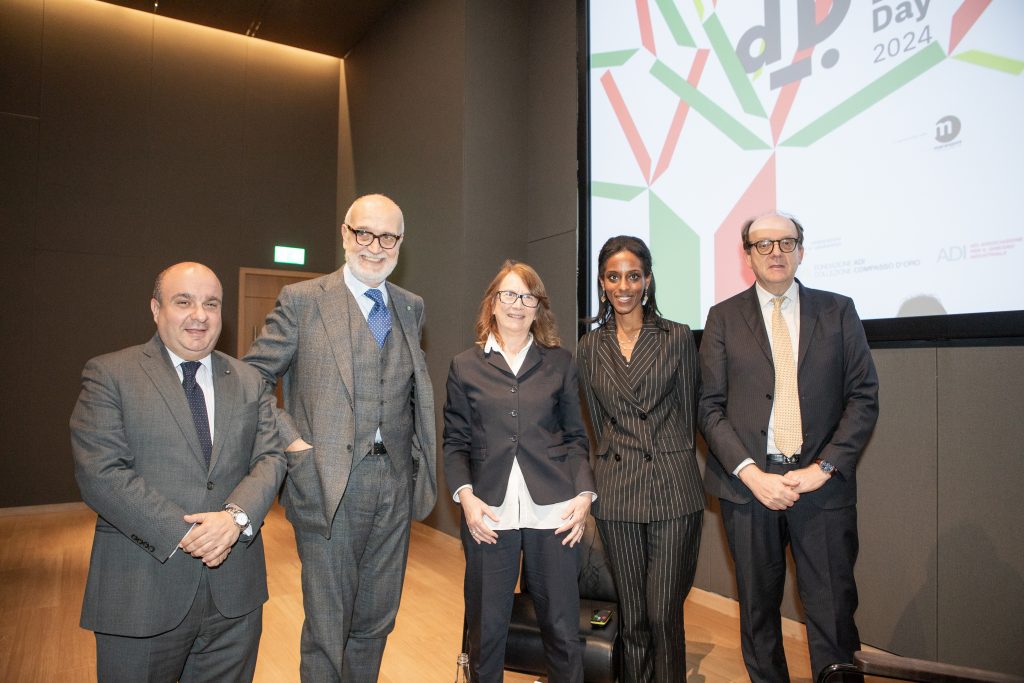
Opening Italian Design Day from left to right – Francesco Bongarra, Ambassador Inigo Lambertini Emilia Terragni, Sennait Ghabreab, Giovanni Sacchi
.The Italian Design Day is a worldwide event. Created seven years ago to promote Italian design abroad, it is supported by the Salone del Mobile – Milano which kicks off on the 16th of April. Last year’s event was awash with interior designers, architects and press; held at the Italian embassy in London. It was a great occasion where – no word of a lie – I even saw someone offer Ferrero Rocher, which basically made my day !
.
This year’s event, held in April, was themed Manufacturing Value – Inclusiveness, Innovation and Sustainability, and was held for the first time at the Design Museum in Kensington. It dovetailed nicely into an exhibition being held there, an Enzo Mari’s retrospective celebrating his 60 year career (Curated by Hans Ulrich Obrist and Francesca Giacomelli). Enzo is a designer well known for his luminaires, forward thinking and ‘uncompromising belief in the social responsibility of design.’. It is open from March the 29th through to September 8th, catch it if you can.
.

Design Museum – Italian Design Day
.
The subject interested me particularly as these are topics that are becoming more and more important in our industry, and its often difficult to work out what’s just lip service, and what is an actual real change for the better.
Sennait Ghabreab (Programme leader, Fashion business at Instituto Marangoni (RHS) moderated the panel with Emilia Terragni (Associate Publisher at Phaidon Press LHS) answering the questions.
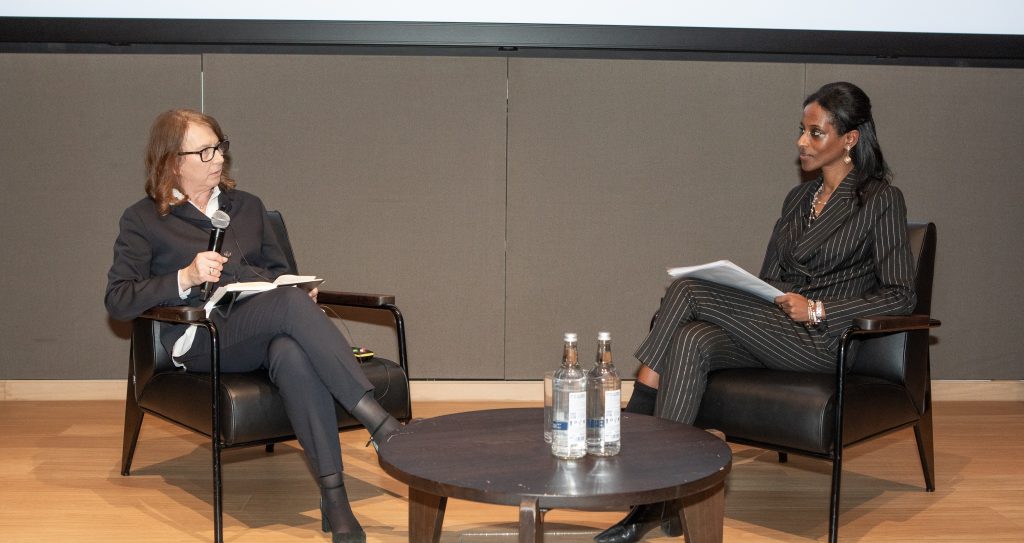
Emilia Terragni (Associate Publisher Phaidon Press) Sennait Ghabreab (Programme leader Instituto Marangoni)
.
.
Italy is home to some of the worlds best known lighting manufacturers and plays on its ‘Made in Italy’ branding. As Emilia Terragni mentioned, ‘Technically ‘Made in Italy’ refers to products that are manufactured in Italy, but in a larger sense is synonymous with being made with care, quality, craftmanship and style. Its not about just geographical indication of products, but also signifies a certain level of excellence, tradition and creativity that is associated with Italian craftmanship.’
It was interesting to hear Emilia’s thoughts on not only the creative process but the environment from where it comes, which is an interesting line of thought. Having worked for two Italian lighting companies they certainly are different in their approach and aesthetic to, say, a Scandinavian manufacturer.
Emilia Terragni. ‘Designers are deeply inspired by their environment; the tradition they are rooted too, and the aesthetic they are surrounded by.
Italy started its industrial evolution a little bit later than most other countries, immediately following the second world war, with a transformation from being an antiquated deeply rural country, into a modern industrial one. Italy needed to be rebuilt, not just the cities, factories but also to go through a moral reconstruction, design played a significant role in this, connecting creative minds through an exceptional network of small and medium family run artisanal manufacturers. These designers developed a new modern style as a means to abandon the past and embrace the future’.
Sennait Ghabreab posed an interesting point to Emilia Terragni:
‘Exploring innovation, alongside the concept of legacy; with designers such as Mari, Castiglioni, Mendini, Ranchi, what is their legacy on the international design stage, on this the Italian International Design Day?’
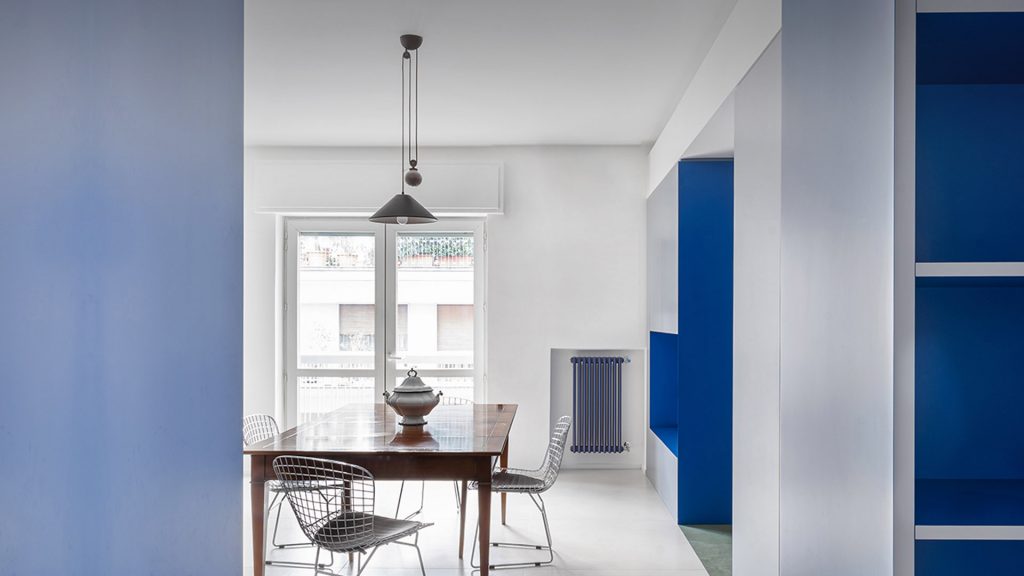

.Enzo Mari – Aggregato – Photo Courtesy Artemide
.


Achille & Pier Giacomo Castiglioni – Arco – Photo Courtesy Flos
.

Edge – Mendini Photo Courtesy Artemide
.Emilia Terragni. – ‘First of all if you look at these images it’s important to understand that designing isn’t just about a pretty chair, it’s much more. In Italy at this time (after the second world war) there was this idea of redesigning the entire life, redesigning an object that was a part of the culture.
The experience of Olivetti was one of the most incredible examples, a company producing typewriters, calculators, and later computers. A real design led company where design was not only in the product, but in the way the organisation was run in an ethical way, for example they looked after the workers by having the kindergarten on site and exercised a progressive way of running the company, a vision which unfortunately died with the owner Adriano Olivetti.
When the Castiglioni brothers started their design practice, design was very much dependent and connected on architecture and art. In some sense it was a new discipline, and while most designers were battling between past and present, modernity traditional craftmanship and industry, the brothers burst into the scene with a new sense of design without compromise. The design style is based on ‘assemblage’ technological reduction, with a sense of irony.
They took a humble object and paid homage to its ingenuity and inventiveness, reusing it and reproposing it in a new context’.
It also was interesting to hear Emilia Terragni’s thoughts on Enzo Mari, a designer extremely relevant for today’s environmental challenges, and ahead of his time in terms of his approach to sustainability and design idea’s.
E.T. ‘For Mari the role of design has a deep social responsibility, his research into shapes, materials and production was aimed at producing perfect objects with simple solutions, they must be sensible, affordable and practical’. He believed that good design should be available to everyone not just the elite, to be truly democratic. He felt that the workers who manufactured the items he designed should not only be renumerated fairly, but also be proud of what they were producing, his approach to design emphasised hands on learning and the importance of craftmanship, and was very interested in people in general, from all walks of life. He designed many wonderful projects for children, and was always adamant not to patronise them, he used to say that ‘Kids don’t play to use up free time, when children play, they learn how the world works, every toy, every game every book we give them helps them to process and grow their knowledge’.
I do wonder how Mari would react to the world today, when it seems that technology has driven a wedge between the enjoyment found in a physical, tangible objects, compared to a digital experience. Let’s hope a large solar storm doesn’t wipe out all this technology, as the mayhem of losing a mobile phone could end us all?!.
Sustainability was discussed and making an object that lasts is obviously key. Sennait Ghabreab asked an interesting question to around the aesthetic durability.
‘Aesthetic durability is extremely important in the context of sustainability, especially in design. This aesthetic durability needs of course to be associated with the durability and longevity of the materials from which an object is made. While its absolutely important, more than ever, not to create more disposable objects that will not last because they have been badly made from poor materials, on the other hand we don’t want to produce objects that will last for ever but that we will no longer like any more after a certain period. We must go back to the same principle and look at the quality of the thinking behind the creation of an object. Quality is not about taste, quality lasts but taste evolves. As a consumer we have the responsibility that whatever we decide to buy, it is a conscious purchase that follows the famous William Morris quote, ‘Have nothing in your house that you do not know to be useful or believe to be beautiful’.
It was great to hear in the conversation an acknowledgement that the age of making things just for the sake of it is over. More designers are trying to integrate recycling into the design process, and in fashion, upcycling is finding its way into the sales process, something unheard of a few years ago in mainstream commerce, although this has obviously been around in one form or another, e-bay and charity shops have been doing this for years.
I had to ask a question to the panel around the Salone Del Mobile (Milan Furniture Fair) itself, as we know this event is a bit of an environmental car crash.
Chris Fordham: ‘ Covering il Salone Del Mobile for The Light Review last year, I was torn, because even though its an event that I love, I cant justify it from a sustainable point of view. There were almost half a million people there last year, and you think of all the stands that were in the main destroyed after the show, it’s such a waste of resources. How do we make it a better event because from a sustainable perspective as it really can’t carry on as it is?’
Emilia Terragni ‘Absolutely, actually I know that there are a lot of manufacturers who aren’t going to the Saloni any more, for example there are a lot Danish manufacturers that won’t show there, as they are at the 3daysofdesign in Copenhagen at the beginning of June. I think that one of the solutions would be to do what the Triennale Milano is doing, create exhibitions that will stay longer in the city, for more than just one week. Last year was a little bit strange, there was this very complex show there for only three or four days, dismantled straight after. I have noticed there nowadays people don’t just go to show or see the products but also attend the symposium etc, also many of the installations now use material that is re used for other purposes, it is slow but they are going in the right direction’.
.
.
.
.