



The Case for Evidence Based Lighting Design
I feel a bit like I’ve walked into a room with a tabletop scattered with jigsaw puzzle pieces, and as I start pushing them around, a rather radical picture is beginning to emerge. For decades, those of us in the lighting design community have operated under the comfortable illusion that we hold all the answers, dutifully armed with our beloved codes, standards, and the latest guidance documents like the SLL’s LG23. We design our schemes in what can easily become an academic fantasy lab, hand over the drawings, and rarely stop to ask the most fundamental question of all: once the contractors pack up and the building fills with people, how on earth do we actually know it works??
This is where evidence-based design, or outcome-driven design if you fancy the tech jargon, comes into its own. Working on circadian lighting projects with Dr Shelley James across care home environments has shown me that real-world outcomes (such as less night-time disruption, reduced daytime medication, and genuine resident well-being) don’t come from blindly hitting lux levels on a spreadsheet; they come from listening to the people living and working inside the building. So, pull up a chair, leave the compliance manuals to one side for fifteen minutes, and let’s explore why our industry desperately needs to start listening to the real evidence.
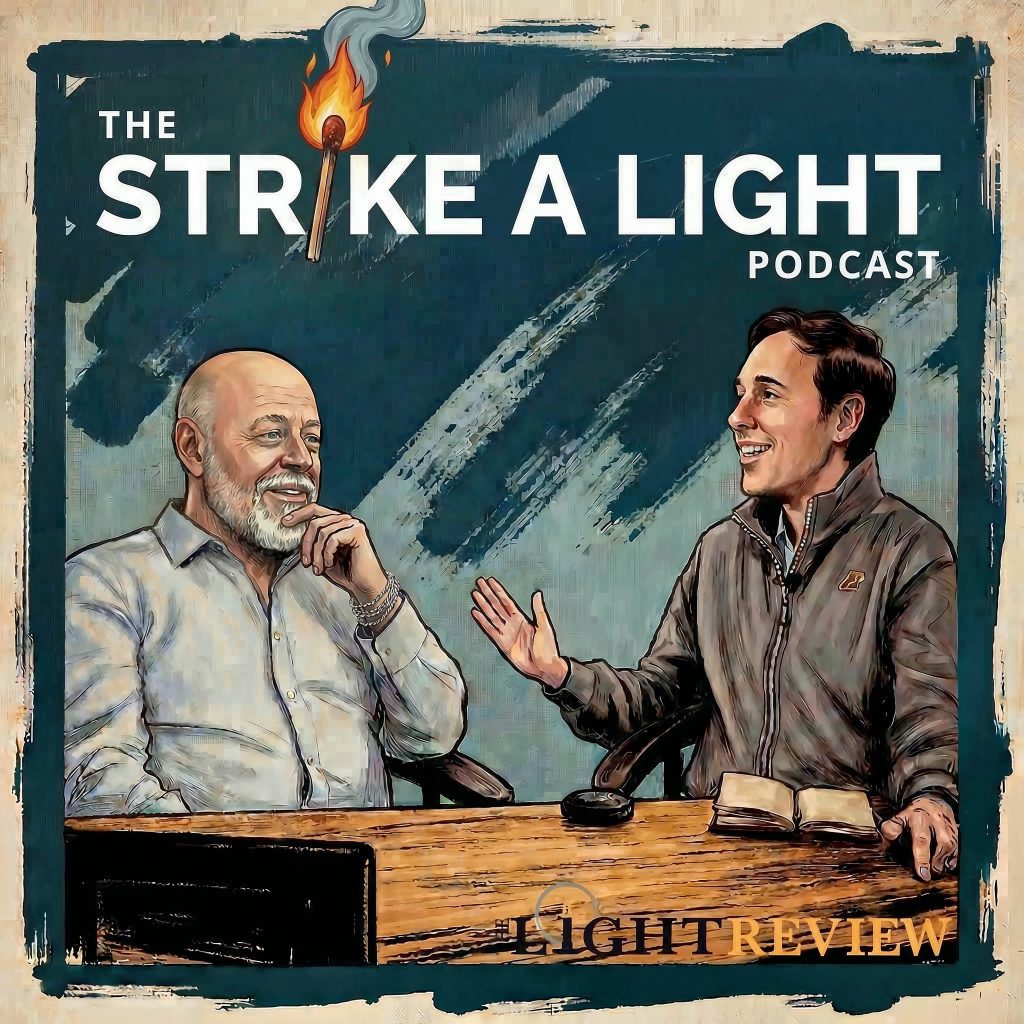
Podcast: The Strike a Light Podcast
Produced by: Duncan Smith for The Light Review
Host: John Bullock (with intro by Chris Fordham)
Episode: 13
Episode Introduction: “What I want to talk about is a thing that we are calling evidence-based design, which is a pretty radical way of changing the way that we look at our design briefs as designers… how do we know that it works if we don’t do the assessment at the end of all of that?”
Episode Summary
Are lighting designers spending too much time designing for compliance checklists instead of real human beings? In this solo episode of the Strike a Light Podcast, John Bullock dives into the concept of evidence-based design and challenges the lighting industry’s long-standing reliance on rigid codes and standards. While documents like the SLL’s Lighting Guide 23 (LG23: Design, Creativity and Compliance) offer valuable starting points, John argues that true design excellence requires stepping out of the theoretical “fantasy lab” and evaluating actual real-world outcomes.
Drawing on his recent circadian lighting projects alongside Dr Shelley James in care home environments, John shares compelling evidence of how tailored lighting interventions deliver measurable benefits. From dramatic reductions in nocturnal distress and daytime medication to increased socialization between residents and staff, the hard data demonstrates that lighting has a profound biological and emotional impact. Crucially, these successes stem from a cooperative dialogue between designers, researchers at Oxford University, bespoke luminaire manufacturers, and the care home managers on the ground.
John explores why every project must be treated as an individual assessment rather than a generic high-street rollout, how to interpret variables across complex buildings, and why post-occupancy evaluation remains the vital missing link in modern lighting practice.
Key Takeaways You’ll Hear in This Episode:
- Beyond the Rulebook: Why codes and standards from the SLL and ILP are only starting baselines, and why blindly following them risks missing the true needs of the client and occupants.
- Measurable Care Home Evidence: How circadian lighting installations are directly linked to reduced night-time disruption and lower daytime medication in care homes, without altering furniture, decor, or routines.
- Bespoke Solutions vs Commercial Rollouts: Why varying room orientations and architectural quirks demand tailored luminaire designs and agile collaboration with lighting manufacturers.
- Closing the Post-Occupancy Loop: Why lighting designers must insist on post-occupancy assessments to discover whether a scheme actually delivers its intended human outcomes.
- Holistic Human Interaction: Understanding that lighting is only one part of a living ecosystem, and that client feedback and emotional well-being must guide future design standards.
The Book John Mentions in the Podcast
- Book Title: Urban Lighting for People (Full title: Urban Lighting for People: Evidence-Based Lighting Design for the Built Environment)
- Editor / Author: Dr. Navaz Davoudian
- Publisher: RIBA Publishing
The Bottom Line
Following lighting codes gives you technical compliance, but evidence-based design delivers spaces that genuinely improve human lives. By listening closely to clients and measuring real post-occupancy outcomes, the lighting industry can move beyond assumptions and create installations that truly work.
🎧 Listen to the full episode above to hear John’s complete breakdown of evidence-based design and lessons from care home installations.
Don’t miss an episode!
If you enjoyed this deep dive into the realities of modern lighting, make sure to subscribe to the Strike a Light Podcast wherever you get your audio.
For more honest, expert insights into the lighting industry, visit The Light Review online.
About the Hosts