



The Art of Concealment in Architectural Lighting Design
I have a confession to make, and coming from a lighting designer who has spent several decades in the trade, it usually raises a few eyebrows: I don’t really like light fittings. Strange, perhaps, but there is something profoundly satisfying about entering a space where the lighting does its job without shouting about the decorative fixture hanging from the ceiling or cluttering the perimeter. Over the years, I’ve always maintained that the entire volume of a room should be your luminaire. When light grazes a textured wall, skims across a polished floor, or bounces off a ceiling, that architectural surface becomes the fitting. It transforms a sterile box into a living environment. Yet we’ve reached a curious point in modern design where the desire for “invisible lighting” has become a fashionable architectural obsession, often divorced from the messy physical reality of how light actually travels through space.
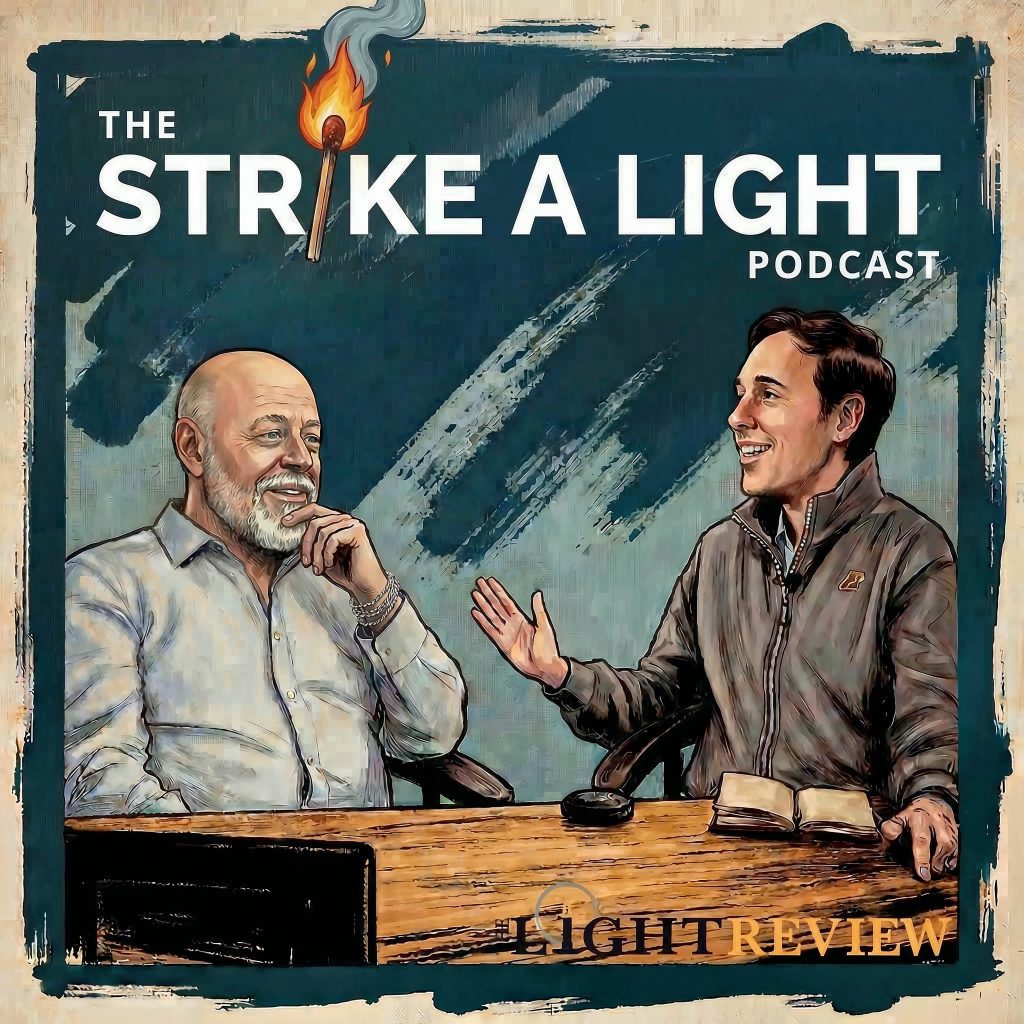
In this fourteenth episode of Strike a Light, Chris Fordham and I sit down to tackle the myths, the magic, and the absolute madness of trying to make light appear out of thin air. From architects who demand zero visible fittings while stubbornly refusing to allocate a single millimetre for a coffer or a recess channel, to my own ill-advised adventures trying to hang chandeliers from £50,000 rooflights using magnets (and being sternly warned that crushed glass and tears would inevitably follow!), we unpack what it really takes to achieve architectural concealment. Can you suspend light fittings on twenty-pound fishing line without courting disaster? Why are mirrors the single most underused weapon in a lighting designer’s arsenal? And what happens when the immaculate CAD drawings collide with a site contractor holding a chisel and scratching his head? Grab a coffee and join us as we pull back the curtain on stage tricks, Turkish rugs, and the true craft of concealment.
The Strike a Light Podcast
Produced by: Duncan Smith for The Light Review
Hosts: John Bullock & Chris Fordham
Episode: 14
Episode Introduction: “Hello and welcome to this Strike a Light podcast with me, Chris Fordham and John Bullock… today’s topic is lighting that’s invisible, invisible lighting, which is done well. And why clients sometimes ask for it and are surprised at the end result.”
Episode Summary
Can lighting ever truly be invisible, or are we simply asking architects and contractors to perform stage magic? In this episode of the Strike a Light Podcast, John Bullock and Chris Fordham delve into the increasingly popular demand for concealed, integrated illumination. While clients and architects routinely ask for light that appears from nowhere, achieving seamless integration requires rigorous collaboration, bespoke detailing, and a deep understanding of optical physics rather than catalog shopping.
John and Chris explore the common pitfalls of minimalist architectural lighting, from flat, lifeless spaces that lack proper layering to the practical absurdities of trying to anchor fixtures without structural provisions. Along the way, John shares personal anecdotes of hanging luminaires on high-breaking-strain fishing line, dodging catastrophe with high-powered magnets on structural glass rooflights, and transforming dark corridors into dramatic gallery spaces using single rugs and carefully angled mirrors.
Ultimately, the discussion highlights why invisible lighting cannot be treated as a last-minute stick-on afterthought. True concealment demands that lighting designers get directly into the architect’s studio early in the process, and onto the construction site with daybook sketches in hand, working hand-in-glove with the tradespeople actually cutting the plasterboard and fixing the timber.
Key Takeaways You’ll Hear in This Episode:
- The Architecture as the Luminaire: Why true architectural lighting isn’t about choosing decorative fixtures from a catalogue, but turning walls, ceilings, and surfaces into secondary light sources through controlled reflection and grazing.
- The Myth of “Nothing There”: Why light cannot emerge from thin air without physical consequences. If an architect refuses coffers, recesses, or channels, the light source must be resolved through honest structural dialogue rather than wishful thinking.
- Mirrors as the Ultimate Invisible Tool: How high-quality mirrors allow designers to redirect, bend, and project beams into specific targets from concealed positions, maintaining dramatic darkness across the room while illuminating key features.
- Stage Magic vs. Site Reality: The line between bold experimental design (such as suspending fixtures on clear monofilament fishing line) and structural disasters like attempting to clamp magnetic fixtures through 35mm glass skylights.
- Contractor Collaboration Over CAD Perfection: Why the success of integrated lighting details rarely comes from immaculate computer drawings, but from hand-drawn sketches in a site daybook worked out directly with the carpenter or electrician holding the tools.
The Bottom Line
Invisible lighting is far more than an aesthetic trend; when executed with finesse, it elevates architecture from a static enclosure into an emotive, dynamic experience. However, pulling off the illusion requires technical honesty, active spatial layering to avoid flat illumination, and continuous on-site dialogue with the trades who bring the details to life.
🎧 Listen to the full episode above to hear John and Chris break down the craft, the stage tricks, and the site-level reality of architectural concealment!
Don’t miss an episode!
If you enjoyed this deep dive into the realities of architectural lighting design, make sure to subscribe to the Strike a Light Podcast on Apple Podcasts, Spotify, Amazon Music, or YouTube.
For more honest, expert insights into the lighting industry, visit The Light Review Online.
About the Hosts