



Do National Traits Define the Light Fittings We Create?
I must admit, when Chris suggested we spend an episode unpicking whether light fittings carry a national character, I caught myself doing a bit of mental inventory. We all talk about a ‘Scandinavian vibe’ or ‘Italian styling’ when writing specs or walking exhibition halls, but how often do we stop to ask why those aesthetics exist in the first place? Is a Nordic pendant soft and glare-free simply because of a design trend, or is it a direct emotional response to four months of midwinter darkness? (And if you’ve ever tried hanging a wild Venetian glass sculpture in a low-ceilinged suburban semi, you’ll know that national traits don’t always travel without a few raised eyebrows.)
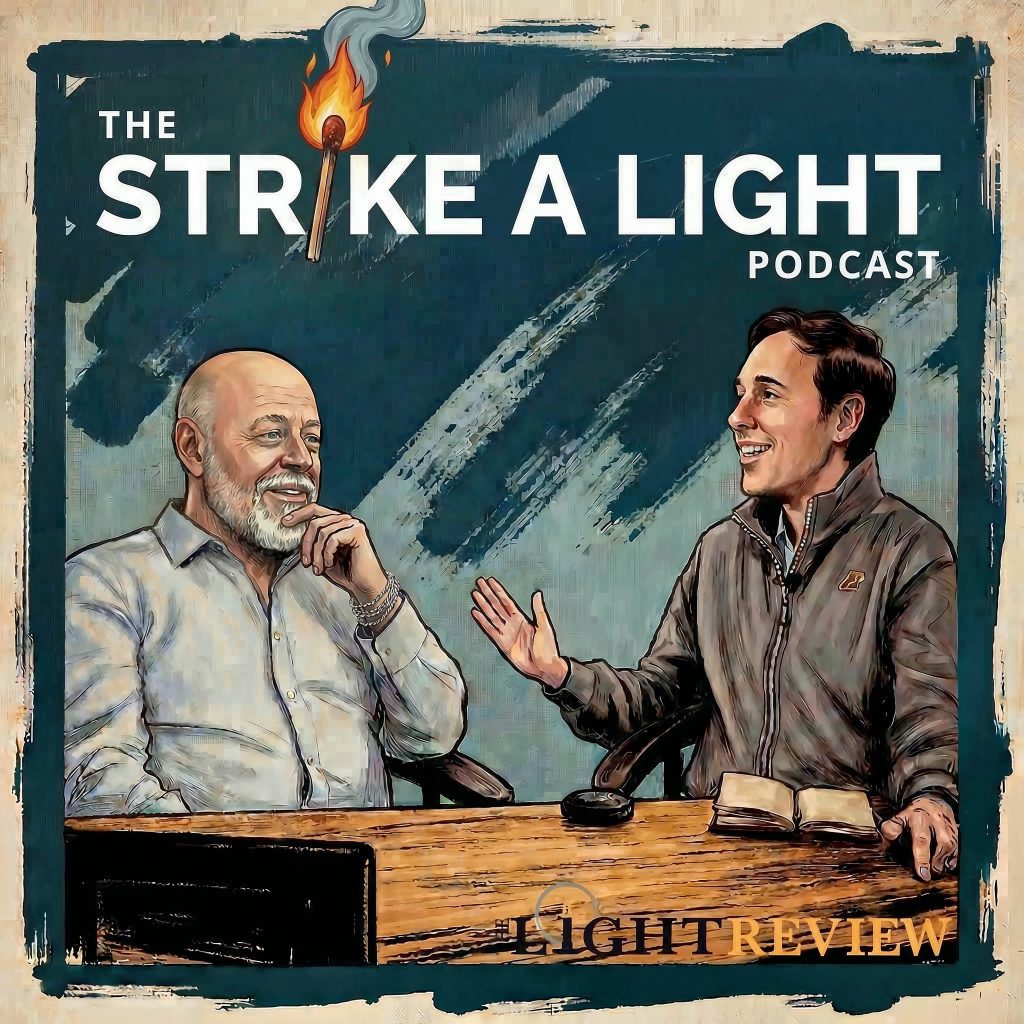
In this episode of The Strike a Light Podcast, Chris Fordham and I explore the cultural DNA of lighting aesthetics. From the ruthless mechanical perfection of German engineering to the passionate, rule-breaking sculpture of Milanese design studios—where nobody seems to care how the bloody thing actually works until long after the prototype is built—we examine how geography, climate, and national temperament shape the fittings on our ceilings. Plus, we turn the lens on ourselves: in a globalised market, what exactly is British lighting design, and is our true creative superpower simply our knack for making other people’s ideas actually work properly? Grab a brew and join us for a proper wander through international design psychology.
Podcast: The Strike a Light Podcast
Hosts: John Bullock & Chris Fordham
Produced by: Duncan Smith for The Light Review Online
Episode: 11
“Can you look at a light fitting and immediately know where it came from? Is there a national character, a cultural DNA, etched into the aluminium and glass?”
Episode Summary
In Episode 11 of The Strike a Light Podcast, hosts John Bullock and Chris Fordham take on a fascinating question: does every light fitting carry the national character of the country that created it? Starting with the distinct, soft, glare-free geometry of Scandinavian classics by Poul Henningsen and Verner Panton, John and Chris examine how geography and climate shape a nation’s relationship with light.
The conversation moves across Europe, contrasting the passionate, touchy-feely sculptural forms of Italian powerhouses like Flos and Foscarini with the unflinching engineering precision of German manufacturing. Chris shares personal reflections from his student days studying product design in Milan, comparing the Italian freedom to conceptualise impossible ‘holographic’ objects against the pragmatic British requirement that every design must explain exactly how it works.
Finally, the hosts turn their attention to British lighting design and manufacturing. Rather than claiming a single aesthetic style, John and Chris discuss how British creativity often sits in pragmatism, problem-solving, and engineering refinement—taking great ideas like the Bestlite or heavy-gauge glassmaking and making them work flawlessly in the real world.
Key Takeaways You’ll Hear in This Episode:
- Scandinavian Glare Control & Climate: How long Nordic winters birthed a design philosophy focused on hiding the lamp and diffusing light through soft, geometric reflectors.
- Italian Passion vs. Mechanics: Chris Fordham recalls studying design in Milan, where emotional, sculptural concepts took center stage long before anyone worried about how to build them.
- German Engineering Integrity: Why German lighting fixtures prioritize technical efficiency, robustness, and longevity over fleeting decorative trends.
- British Pragmatism & Refinement: Why British lighting design often excels in engineering problem-solving—refining and perfecting concepts so they perform reliably.
- The Concept of ‘Skyhooks’: John’s classic studio challenge to young designers: push creativity as far as you like, but you must be able to explain how it works.
The Bottom Line
Design may be globalised, but national character remains quietly woven into the materials, mechanisms, and aesthetics of the fittings we specify every day. Understanding where those traits come from gives lighting designers a richer vocabulary when curating spaces.
🎧 Listen to the full episode above to hear the complete breakdown of national character in lighting design.
Join the Discussion
Do you agree that national traits still shape lighting design, or has the global market wiped out those distinctions? We’d love to hear your thoughts! You can leave a comment below to join the conversation, or email the show directly at podcast@thelightreviewonline.com.
Don’t miss an episode!
Subscribe to The Strike a Light Podcast on Spotify, Apple Podcasts, Amazon Music, or YouTube.
For more honest, expert insights into the lighting industry, visit The Light Review Online.
About the Hosts