

.
If you’re ever looking for a conference template that addresses the issue of both where we are and where we need to go, I would recommend the inaugural ROLAN (Responsible Outdoor Light at Night) conference that was held online on 12-13 May 2022.
And, before we get wistful about the old days of live conferences where everyone’s in the same space and able to catch up with their mates – the online format ensured that we had access to the very best from around the world – and was the better for all that.
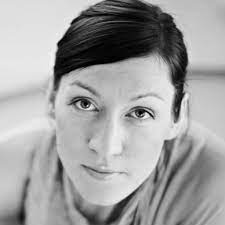
ROLAN was co-organised by SLL and ILLUME and was hosted by Karolina Zielinska-Dabkowska, Head of ILLUME and Assistant Professor in the Faculty of Architecture, Gdansk University of technology – and I can’t think of a more knowledgeable person to hold that space!
With more than 30 speakers from 12 countries, the conference focused on four areas of discussion:
- Losing our dark nights
- Best lighting practice to reduce light pollution
- Light pollution legal aspects
- The impact of light exposure at night on the environment and humans
Day 1 set the scene with a major session talking about light pollution, focusing on the importance of protecting our dark skies, followed by an afternoon session dedicated to best practice to reduce that light pollution. As that’s a negative proposition, let’s say that the presentations were more about engaging with lighting design and technology to ensure good outcomes for outdoor lighting – always from the position that a light intervention is needed in the first place . . . which is a question that we need to ask ourselves (and our clients far more regularly than we do.
Mark Major raised an issue that must make SLL, as co-organisers of the conference, feel particularly schizophrenic in the wake of the conference. For the first in his Ten Things We Can Do, Mark encourages us to Be Better rather than Best . . . where ‘Best’ usually equates to Best Practice. And Best Practice comes from published Lighting Guides, aspects of which are often dated before the document is published.
But rather than embarrassing our hosts, who certainly know the problems of putting something into print in such a rapidly changing world, let’s go with this one. Putting on a conference that would only promote existing ‘Best Practice’ would risk denying latest research – the research that will change the design/technical parameters (and the next edition of the Light Guides!). ROLAN brought together researchers (who will always be the first to admit that more research is necessary), lighting practitioners and – what shall we call them, lighting managers on the ground?
If we take Mark at his word, our Better efforts will pay attention to the new research, rather than relying on a Guide that may be several years old. Its only now that we begin to understand the extent of the impact of night-time lighting on the biosphere, for example. We’re learning more about the variance in minimum levels of light for suppressing melatonin in vertebrate groups; its no longer just about us. And we can also see how night-time lighting in the agricultural landscape can negatively impact crop production. This is important stuff!
We’re not the only people who are realising that this is important. Regulatory measures are developing around the world that will protect flora and fauns from light pollution. It’s likely that legislation will be adopted more quickly than Lighting Guides will be revised so, as specifiers and duty-of-care holders, we’d better keep a close eye on how the law is changing.
.
We really need to talk about ALAN
ALAN is a thing; Artificial Light At Night was an acronym howling to get out of the box. I searched around for ALAN references and came across this: Artificial Light at Night (ALAN): A Potential Anthropogenic Component for the COVID-19 and HCoVs Outbreak.
( . . . no, me neither)
Whenever you see the word ‘anthropogenic’ in a scientific report, you know we’re in trouble . . . again. And this is what the authors were researching: “ The stress exerted by ALAN leads to the impaired body functions, especially endocrine, immune, genomic integration, and overall rhythm features of different physiological variables and behaviours in nocturnal animals. Night-light disturbs “virus–host” synchronization and may lead to mutation in the genomic part of the virus and excessive virus shedding. “ – so we need to consider the application of night-time lighting in far broader health terms than we’ve embraced thus far. Otherwise, we can look forward to a headline telling us that the source of a new fatal pandemic has been traced to an over-lit carpark in Northamptonshire.
So, are we finding our way out of the woods? Not so fast, my friends.
While there was consensus across the speakers as regards the important of controlling ALAN, the point was well made by Dr. Martin Morgan-Taylor; Associate Professor at Leicester De Monfort Law School during the panel discussion following the session discussing the legal aspects around control of light pollution. While we understand and appreciate the need to control light-time lighting, there is an alternative consensus that Light Is Good. The public perception is that high levels of light at night makes us all safe and deters criminals (for which there is, and never has been, any proof). But that’s the headline that is rolled out after every horrific night-time incident; the answer is always that street lighting levels need to eb increased.
While that situation pertains, we will struggle to get the ROLAN message across. Manufactured social indignation (that miss the real issues because they might be too difficult to contend with, or contrary to hard-wired political beliefs) will trump environmental care-taking every time (even though, if we don’t take care, there will soon be nothing to take care of . . .)
ROLAN 2022 was the inaugural conference on this vitally important issue. This writer, for one, looks forward to the next one.
.

.
Feature image: San Francisco Flickr/Thomas Hawk