

When I first got involved in sustainability in the lighting industry – a decade ago – the standing joke at the time was that, if you wanted to invest in a surefire business success, buy into landfill. Oh, how we laughed.
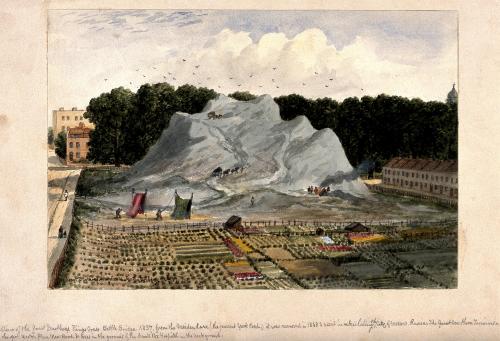
The only role model we had for such an idea was Dickens’ John Harmon, the ‘King of Dust’ in Our Mutual Friend. Harmon worked the Cash from Ash model, raking through the tons of domestic and commercial waste that was collected within London every day. Harmon got very rich – though, in society, he never rose above the unsavoury – so, as role models went, he wasn’t an ideal choice.
Back in the real world, Viridor has the largest network of over 300 waste management facilities in the UK – and Viridor is starting to mine its back catalogue. Viridor is a founding signatory to the UK Plastics Pact, an initiative delivered by WRAP (The Waste and Resources Action programme. The aim is to bring together plastic waste streams and maximise recycling and reprocessing opportunities.
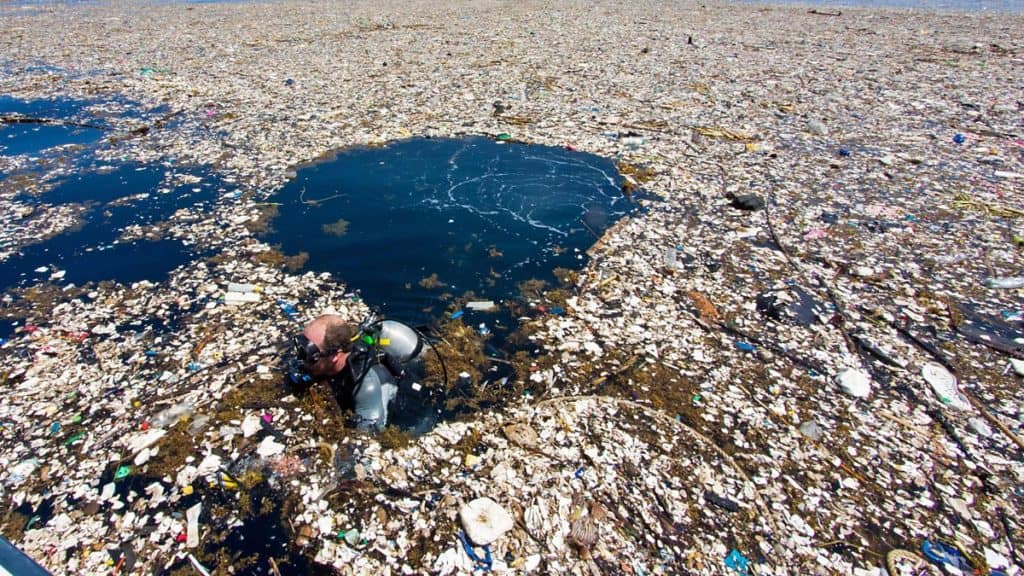
Plastic ocean waste 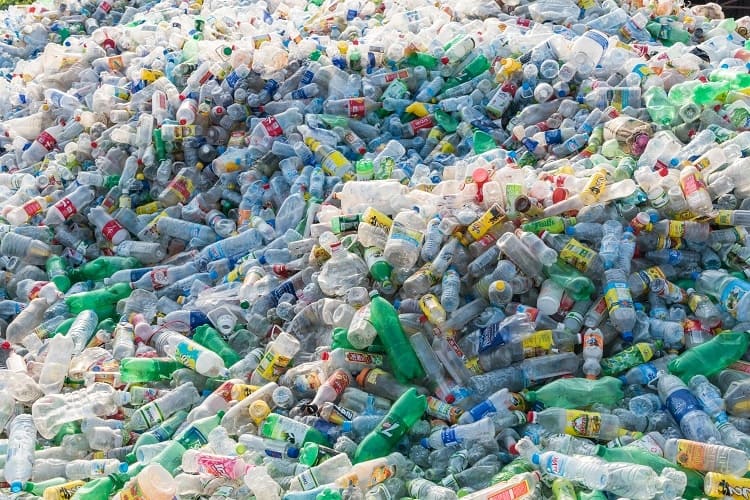
plastic landfill waste
Interface, the US carpeting company, was one of the first companies to bring waste plastics into their supply stream. The company set out on its sustainability journey back in 1994, with 2020 as the target date to achieve negative impact on the environment; their ‘Mission Zero’.
In 2018, Interface helped found NextWave, a collaborative venture to ‘keep plastics in the economy and out of the ocean’. As Viridor mines its land-based plastic waste, so Interface and its NextWave partners are trawling the ocean for discarded plastic.
This is an aside, but I haven’t come across anything better than Ray Anderson, the founder of Interface, talking about his journey towards a sustainable future.
.
The technical response to bringing plastic material back into the feedstock stream.
Typically, plastic waste is handled mechanically. Plastic product (bottles, toys, bits of old motor car, etc) is smashed into tiny pieces, then melted into pellets which make their way back into the production stream. It’s always been a problem of sorting (we all know about trying to sort our plastic packaging) and material degradation. It’s not always viable to use 100% recycled plastic as the on-going generations of material tend to lose their structural integrity. Virgin material is an essential part of the recycling stream. Times may be changing.
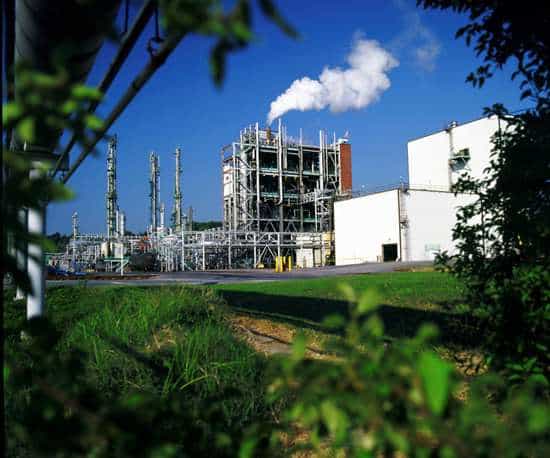
Eastman is based in Kingsport, Tennessee. Most of us are familiar with the name because of its origins as Eastman Kodak. As we know, Kodak was one of the losers in the digital photography revolution and the company spun off its chemical division in 1994. Eastman has elected to shift into making sustainability the core of its strategy and it has announced two new initiatives in reprocessing waste plastics
.Carbon renewal technology, or CRT, which breaks down waste plastic feedstocks to the molecular level before using them as building blocks to produce a wide range of materials and packaging. The company claims this enables waste plastics to be recycled an infinite number of times without degradation of quality.
Polyester renewal technology, or PRT, which involves taking waste polyesters from landfills and other waste streams and transforming them back into a raw material that the company claims is indistinguishable from polyester produced from fossil-fuel feedstocks
(thanks to GreenBiz for saving me the trouble of writing that bit)
The result of this is that we are seeing the potential for a closed loop in plastics production, at least as far as the plastic medium itself is concerned. These processes still require energy and other materials to make it work. We’re not looking at magic or a perpetual motion machine here.
Its this kind of technology that is enabling Viridor (and others) to change the way that we look at plastics.

Plastics Europe,as the name suggests, is the cheerleader for the plastics industry in Europe. The organisation recognises that it is essential to improve the circularity of plastics and to ensure that plastic waste is brought back into use.
The point is made that plastic is not, in itself, a waste material. It is only ever a new product-in-waiting. Its our behaviour (both commercially and domestically) that has befouled the oceans and filled up redundant quarries with a potential material resource. Its just that no one ever told us the truth about what plastic can do.
Yes – but – plastics is a by-product of the oil industry – and we’re trying to get rid of that!
Hear that? That’s the sound of the elephant trumpeting in the corner of the room.
At the moment, petrochemicals (plastic to you and me) account for only 4% of the world’s fossil resource extraction. Its reckoned that 87% of oil extraction is burnt – the ultimate single-use – and that burning is the cause of the biggest problem facing the human race. So, if we stop burning fossil fuels, does that mean we lose the potential usefulness of plastics as well?
At this point, there’s always talk about using biomass and how plastics can be produced from plant material. But we also have a food crisis – too many people (7.5 billion and counting) and massive desertification (or flooding) that is reducing available land for agriculture. It suggests that taking up that precious land to make plastics may not be the best use of that particular geo-resource.
The International Energy Agency (IEA) reported recently that plastics and petrochemical products will drive global oil demand as we head towards 2050. Its expected that petrochemicals will account for one-third of global oil demand by 2030 (less than ten years away!), rising to 50% by 2050. And most demand growth will take place in the Middle East and China, where huge petrochemical plants are under construction.

Saudi Arabia is leading the race to develop petrochemicals industry in the region, with Abu Dhabi also increasing its petrochemical footprint.
“The petrochemical sector is one of the blind spots of the global energy debate and there is no question that it will be the key driver of oil demand growth for many years to come.” IEA Executive Director, Fatih Birol
Plastics: meeting sustainability goals
Capturing plastic waste and bringing the material back into the productive stream meets the UN sustainable development Goal 12 – ‘Striving for more responsible consumption and production’ . . . and it only requires a complete about-face when it comes to the public and business attitude of plastic as a use-and-dispose material.
What does all that suggest for the UK lighting industry?
We are currently wedded to aluminium. Global Market Insights Inc reports that the global aluminium market , estimated at $160 billion in 2018 is anticipated to exceed $250 billion by 2026, a growth rate of 6.5%. The market for aluminium continues to grow:
- Increasing consumer preference towards sustainable beverage packaging options may drive the overall market growth.
- Market statistics for transport applications were the highest and the sector is further anticipated to witness significant gains due to escalating automotive trends activities for manufacturing commercial vehicles.
- Growing aluminum demand in consumer durables applications such as tablet PC’s, sports equipment, furniture and flat-screen TV’s will foster aluminum industry growth
- Asia Pacific region acquired a significant share in the global aluminium market.
(thanks to GlobeNewswire for those words)
Its been suggested that we have over two centuries of aluminium reserves but as time goes on it will become more expensive. We see aluminium as the go-to material because of its material properties and its ease of re-cycling – over 75% of the aluminium that’s ever been produced is still in use. But as energy becomes more expensive – or scarcer, in some circumstances – aluminium will become more expensive to process. If we add the likelihood of aluminium being used as an alternative to copper, iron, steel and stainless steel, then the rest of this half-century might start to see a decline in the attractiveness of aluminium’s current ubiquity.
And we mustn’t forget the bauxite mining that provides the raw feedstock for aluminium production. As the demand for aluminium grows, the more bauxite will be needed. Based on current information, the global reserves will last for only 25 years.
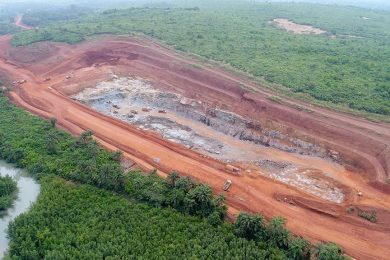
Those future bauxite supply will be determined by political, economic and geological factors. And the effects of the climate crisis is fundamental to that, as well.
Alufer Mining Ltd at the Bel Air bauxite mine in Guinea
As an industry, we are being asked to consider how Circular Economy models can be employed to reduce our demand for virgin material and to maintain the use of processed goods and components well beyond their first iteration. In that case, we need to start thinking NOW about our easy reliance on aluminium going forward.
Ellen MacArthur Foundation !!!
But don’t just listen to me. When organisations like the Ellen Macarthur Foundation start talking about a ‘New Plastics Economy‘ I think we’re obliged to pay attention.
Their vision of the New Plastics Ecocomy is three-fold:
- Eliminate the plastics that we don’t need
- Innovate to ensure that the plastics that we do need are reusable, recyclable or compostable.
- Circulate all the plastic items we use to keep them in the economy and out of the environment
And this has become a Global Commitment.
.
Now that I’ve got to the end of this article I see that its turned into a bit of a shout-out for new thinking about the use of plastics. Ah well – that’s the way it goes sometimes; you think you’re writing about one thing and – once you search out the science – something very different comes out at the end.
If you have something to share in the way that your business is making use of plastics, let me know. Maybe we can put some examples out there for others to follow.