

The COP26 circus has dropped its big tent and the acrobats, jugglers and clowns are getting a new script (same as the old script) ready for their next funking performance at COP27 – One Step Beyond! in Egypt next year.
The fun crew has left behind a few handbills promising some of the attractions heading our way:
- watch those SEA LEVELS RISE!
- stare dry-mouthed at the widespread DROUGHT!
- don’t rock the boat, please, at those incoming FLOODS!
- and don’t sweat the HEATWAVES!
- keep hold of your hat for some UNIMAGINABLE STORMS!
- experience stomach-churning CROP FAILURES!
- be sure to be at the head of the queue for those MASS MIGRATIONS!
And you won’t even have to travel to experience one or more of these – they’re be coming to a town near you.
The aim of COP26 was to get governments of the world (and remember, these are OUR governments, not some aliens flown in from a faraway planet) to pledge to a maximum 1.5°C rise in global temperature by the end of this century. Here’s what the Climate Action Tracker came back with following the commitments from our heroes:
Best case scenario: +1.8°C (Full implementation of all announced targets including net zero targets, binding long-term targets and Nationally Determined Contributions (NDC))
Pledges and Targets: +2.1°C (Full implementation of submitted and binding long term targets and 2030 NDC targets)
2030 targets only: +2.4°C (Full implementation of 2030 NDC targets)
Policies and action: +2.7°C (real world action based on current policies)
So we have LOTS to look forward to!
.
Apart from wearing a floppy hat and a wet suit, what can we do to help things along?
.
MITIGATION
(def: the action of reducing the severity, seriousness, or painfulness of something)
This is final-straw-breaking-camel’s-back territory. The poor beast is already overloaded and the last thing it needs is for us to continue throwing more on top.
We must do less, my friends. We have to reduce that load – possibly even unload some of the straw that’s already there.
We’re calling it the Circular Economy and we’re promoting Remanufacturing – anything, in fact, that reduces the energy load on the planet and slows the need for more raw materials to be ripped from the earth. We all bear responsibility for that camel’s burden, even though. we may not be responsible for much of it (and that’s questionable, given our history), but we’re trying to avoid those last few catastrophic wisps that finally does for the oppressed ungulate.
ADAPTATION:
(def: in biology, the process of change by which an organism or species becomes better suited to tis environment.)
In this scenario the camel’s back is broken. There are no more camels. If we want something carried, we must carry it ourselves. Adaptation is HARD. Here are seven examples of climate change adaptations that we might like to think about:
- Be better prepared for longer and more intense summers, including wildfires.
- Get ready for overwhelming, and permanent, sea-level rises.
- Restructure public heath planning to embrace the outcomes of extreme weather events.
- Protect as much farmland – and food supply chains – as it is possible to do.
- Look to our air quality.
- Be prepared for mass climate migrations to the global north.
- Develop a ‘managed retreat’ strategy for those abandoning climate-ravaged areas (the Somerset Levels – East Anglia – our coastal cities)
I think you can see that there is a major step change between mitigation and adaptation; that’s why acting to mitigate now is the only chance that we get to prevent needing to adapt our lives to the extent that they WILL otherwise change during the course of this century.
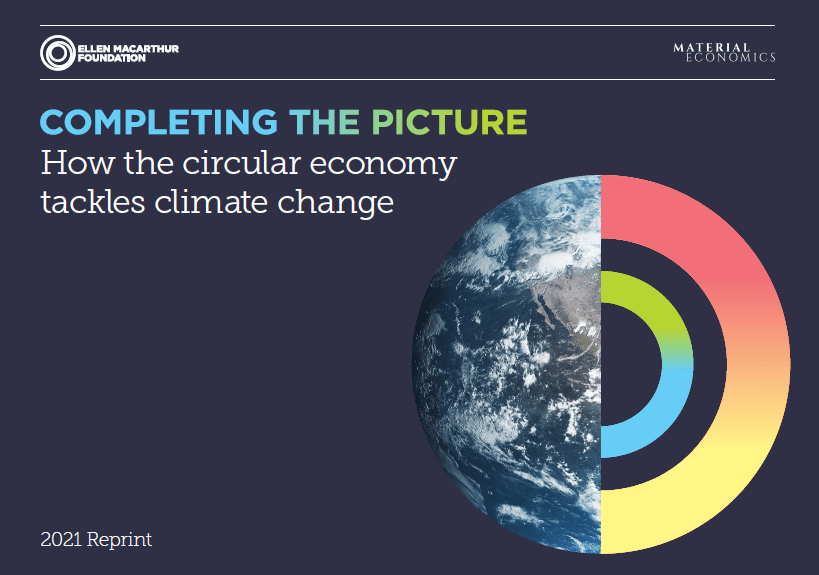
I featured this report from the Ellen MacArthur Foundation in a recent TLR article. Here it is again, because it really does need to be read.
.
..
And a little treat for you. Print out our flyer and stick it in your window. ENJOY!!
.
