
Human Centric Lighting is shifting its focus or, to put it another way, Human Centric Lighting is finally finding its focus.
The term itself has been problematic for many people ever since it was first coined to describe a way that artificial light could be used to augment (interfere with?) the natural rhythms of the body. The concerns were these: the awkward squad among the designers and specifiers said; “but isn’t all the lighting that we do ‘human centric’, so HCL is a meaningless term – even though we know exactly what’s meant by it?” and on the product side of things, marketing departments decided that there was a potentially rich vein to tap by embracing ‘tunable-white’ LED technology, sticking it into whatever products felt worth a punt, and thereby appropriating the term for their nefarious ends.
Thus has it ever been so.
Tunable white: for those late to the HCL party or have stumbled into an alien e-scape, ‘tunable white’ refers to a multi-channel array of LED chips set onto a circuit board. Channels vary from cold white light LEDs (6500K) to warm light LEDs (2700K). Its possible to control the output of the board so that the colour of light can be ‘tuned’ between the two extremes. It’s very clever.
In the meantime, scientists of various stripes have carried on their investigations into how this whole circadian rhythm thing might work – learning a lot but offering very little that is concrete in terms of ‘if you do this, then that will happen’. Unsurprisingly, the human body and mind is rarely amenable to that kind of behaviour.
Through all of this the assumption has been that tunable-white LED technology is Human Centric Lighting, even though it only relates to one aspect of Lighting for Health and Wellbeing – which is where we are now headed.
If we want to see where Lighting for Health and Wellbeing is going, there are a couple of strategies that are worth investigating.
The first is the WELL Standard by The International WELL Building Institute. This is a Standard for designing buildings according to a healthful template that addresses the way that we put our buildings together. Its recognisable to those who prefer to have numbers to follow as it includes descriptive technical standards, but it also offers a creative approach to architecture, which is to be welcomed.
The other strategy is Biophilic Design which seeks to bring the day-to-day experience of humans and nature closer together (again). Biophilic Design (BD) overlaps with the WELL standard in areas such as daylighting and access to exterior views, but BD aims to inspire architects and designers to put people, not building form and technology, at the heart of the process. (This is a fine line I’m drawing here, and I can hear the howls of protest already.)
Where is this taking us?
We now recognise that there are three factors that need to be viewed holistically if we’re to take Lighting for Health and Wellness seriously.
Physiological response: . This is where the origin of Human Centric Lighting lies. Supporting the body’s circadian rhythm is an important factor within the work environment. For most of us it might only be relevant in the winter months, but there are sectors where artificial support of the 24-hour hormonal system is essential; shift working, for example.
Psychological response: the mind can be ‘trained’ to respond to changes in environmental conditions. There have been aspects of this in early HCL installations in schools where student behaviour followed changes in lighting conditions. It was thought that this was a circadian effect, but the responses were too quick for that; this was a psychological response. Playing with our behavioural patterns is a dangerous, and morally dubious, game. Its just as well that the global media industry and high street retailers and fast-food operators haven’t cottoned on to that!
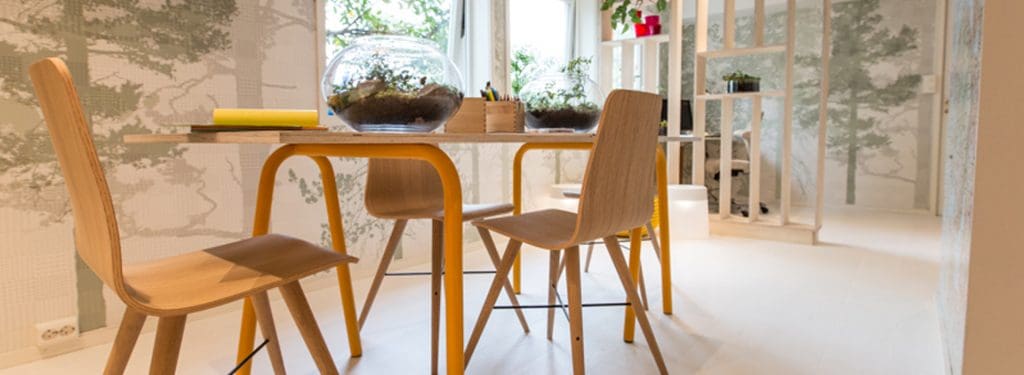
Emotional response: this is where the biophilic interventions come into play. Its recognised that we (humans) respond positively to images of nature. We feel more comfortable, less stressed and generally safer in spaces that have been designed to echo natural conditions.
And if we’re looking for a handy factor to close this circle, such positive emotional interventions also bring about physiological changes; such as lowering blood pressure and heart rates, improving relaxation and aiding concentration.
Overall, this is a great step forward in the process of discovering Lighting for Health and Wellbeing. It puts design, not product, at the heart of the process. And, if anything, it helps to support the good manufacturers who have invested heavily in tunable-white technology, recognising that there is a need for circadian lighting within the overall package, but not being solely dependent upon it.

The Light Review is a Dissemination Partner with the Building Research Establishment (BRE) in Watford and we are following carefully the progress of The Biophilic Office research project that is currently being run there.
Wellness as a concept can only be proven by real-life exploration and we look forward to seeing many more projects coming on-stream in the months and years ahead.