

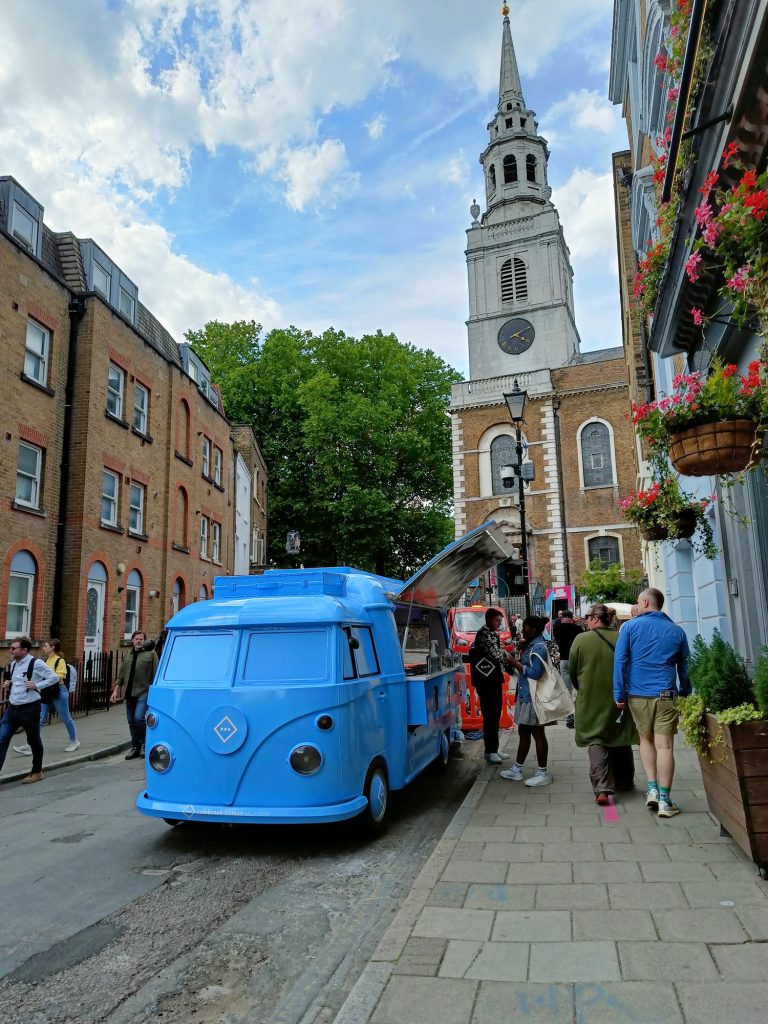
The sun is shining, and the roads of Clerkenwell are crammed with bleary eyed people who appear to spend a lot of time in front of computer screens and drink too much coffee. Ah, the overworked creative! It must be Clerkenwell Design Week.
.
As I blink at the neon pink brilliance of all CDW’s advertising graphic hoardings, the 14th fair seems to have grown in both size and wonder, with three additional exhibition venues, The Charterhouse, Charterhouse Square and a space at St Bartholomew the Great forming part of the ‘Southern District’ adding to the Clerkenwell distinct identity and quirkiness of this – day design show; an event which, for me, is not to be missed.
.
.
The House of Detention provided the perfect backdrop to this year’s Light show, although I do feel for the less mobile amongst us. I have had Multiple Sclerosis for twenty years and recently found out I had Muscular Dystrophy (The combination is at least 1 in billion, you couldn’t make it up !) and I managed (just) but I guess this is the compromise you have to make when you want to have somewhere authentic AND original, I mean it’s not that Victorian prisons would have given a fig about accessibility right?!
.
.
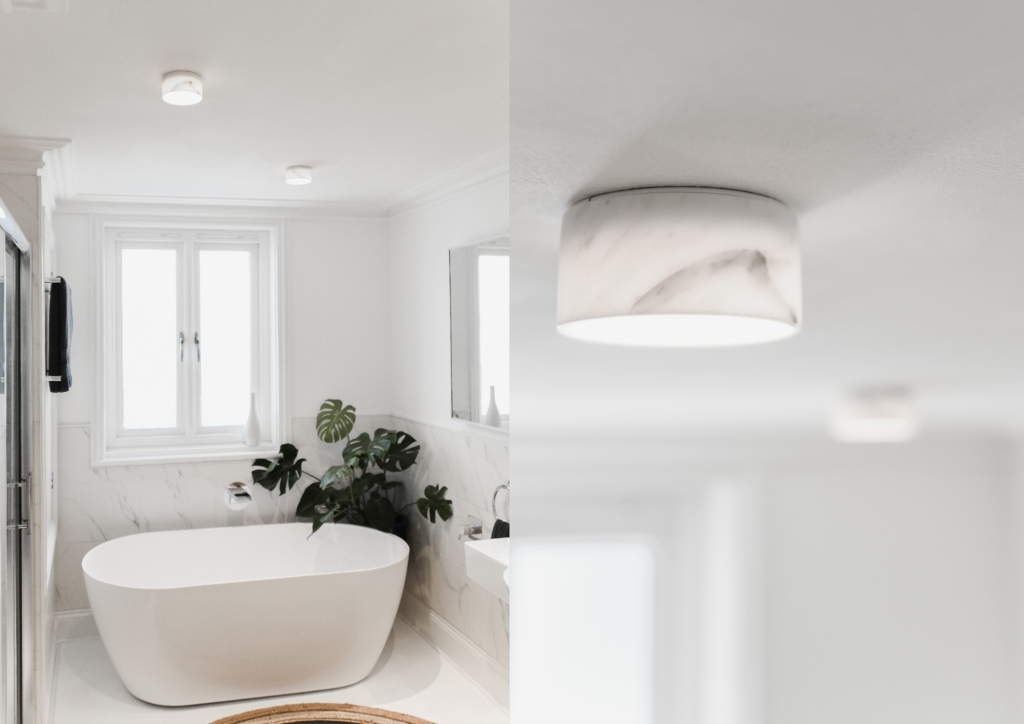
At The Light Review, we’ve always been cautious of glary recessed downlights. I remember once proposing a redesign for a four-floor mansion to replace the many intense downlights spaced at 1m apart in every room. However, the owner insisted on keeping them, considering it a modern solution just because the builder had used the same in his home. Er… no.
The product on show, ‘Obscura’ grabbed my attention for good reason, as it is designed to reduce this glare from the product, as well as creating an interesting aesthetic. Designed by Simon Moorhouse (Founder and Director of UK based company Geom Lighting) he told me a bit about this innovative product.
SM. ‘We are a UK based company, and our first collection is called Obscura. The product is a modular shade system and totally unique in the market, which solves the problem of glare from recessed ceiling lights. It’s a clip-on shade with the clip itself made from a ULV0 polycarbonate (meaning its fire rated). Within the range we have three different collections with different materials and finishes, products with a variety of different colours, metallic finishes, stone and timber’.
‘The depth is 50mm as standard, and we also sell wall wash and low-profile shade options. Our shades can be installed within minutes without requiring the services of an electrician and can be bought in standard finishes or custom specified by architects or interior designers through our bespoke service, to reflect your brand identity. Using this product removes glare and creates instant atmosphere.’
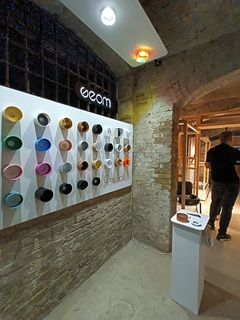
This product is great for those tired recessed led downlight installations (not designs) that have been chucked in without any thought of the comfort or look and feel for a space. Obscura can be fitted to 95% of LED recessed downlights and was patented in 2022.
.
.
.
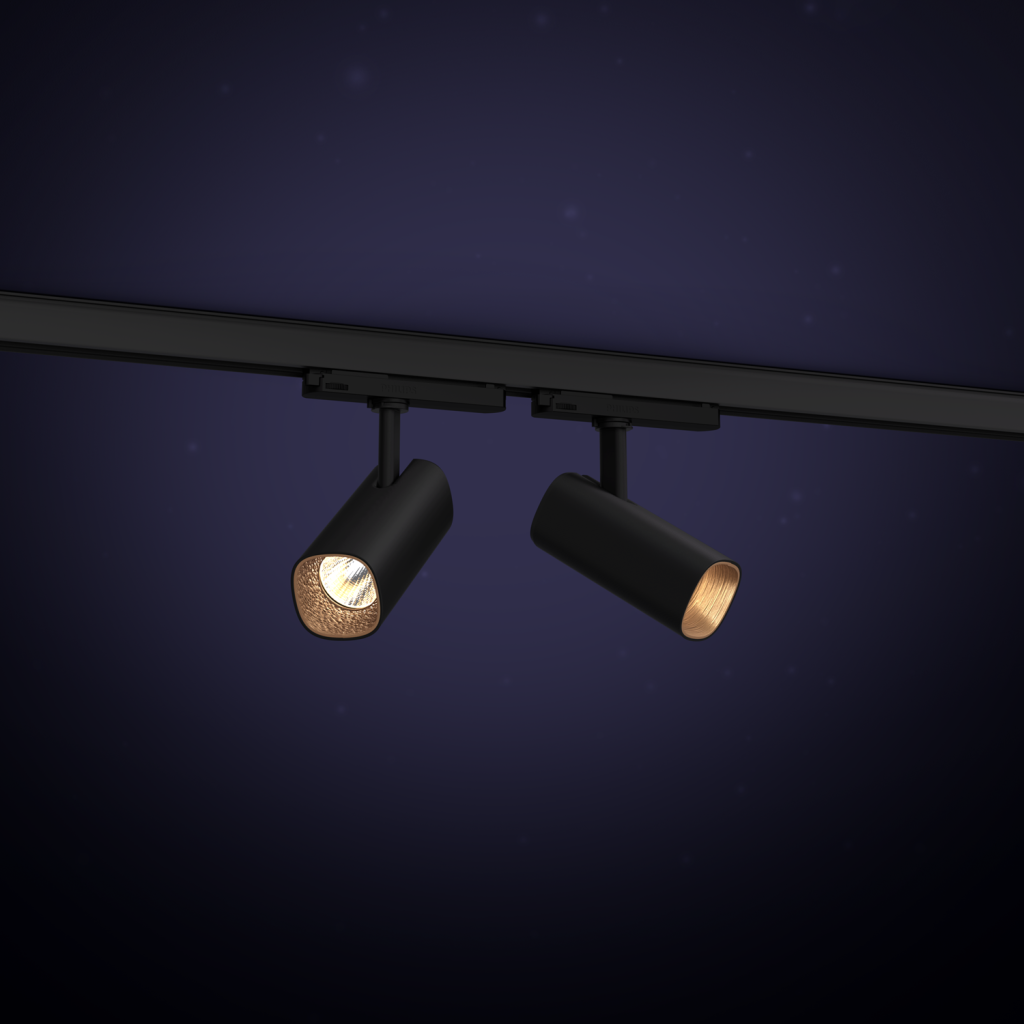
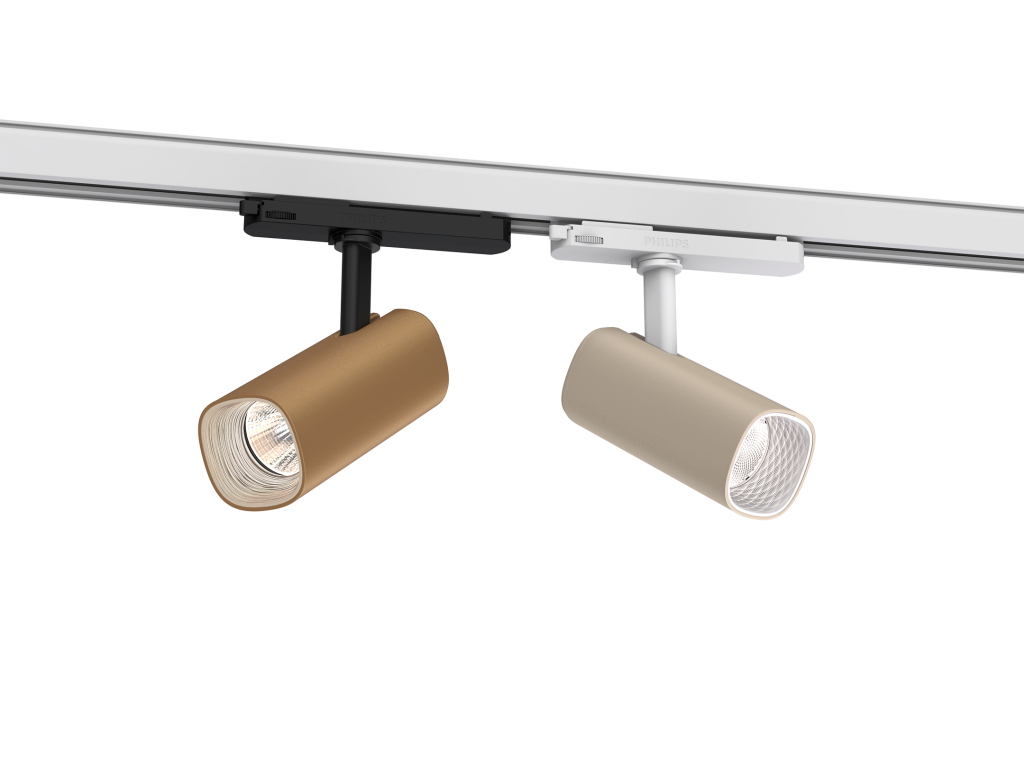
In past shows attended I found the 3D printed versions from Signify (Formally known as Philips) a little lacklustre and staid to say the least, so I was pleasantly surprised to find this 3D-printed track mounted spotlight really bucking the trend, with an aesthetic that stood out and with a great sustainable story to boot.
.
The product on show was called ‘Smooth’ (Designed by Paul Thursfield) from the ‘Accent family’, and Commercial Lead for 3D printing – Alastair Aiken gave me the run down.
‘This product has been designed with the retail and hospitality sector in mind, and is made from 65% recycled content, with a mixture of vegetable and Tall oil (Tall oil is a by-product of the paper making industry). It has a whole range of different optics, beam angles and different outputs, and comes in several different colour finishes and textures, for the body and textured front ring. Snoods and honeycomb accessories are all available as well’.
Not on show here is the recessed and a cylinder version which give you a family with a similar aesthetic feel, and at the end of life we want to bring them back to re-use and can use up to 30% of an old product in the manufacture of a new luminaire’.
This product has a great appearance; I love the textured finish and can see this being used in a variety of applications, from residential, high-end boutiques, over reception desks, galleries and the like. But the best thing for me is its sustainability credentials, with all printed parts made from at least 65% recycled and ISCC Plus -certified bio circular materials. The heatsink is made from 85% recycled aluminium, and product is upgradable during its lifetime.
The great thing about this light show is that you can see a wide variety of style of products close to each other, breaking up the monotony of banks of let’s say, recess downlights, or 600 x 600 panels. The next product makes more sense when you know where it comes from and the story behind it, which is well… refreshing, because you sort of say, oh I get it now! Joel Haren director of ‘Studio Haren’ explained all..
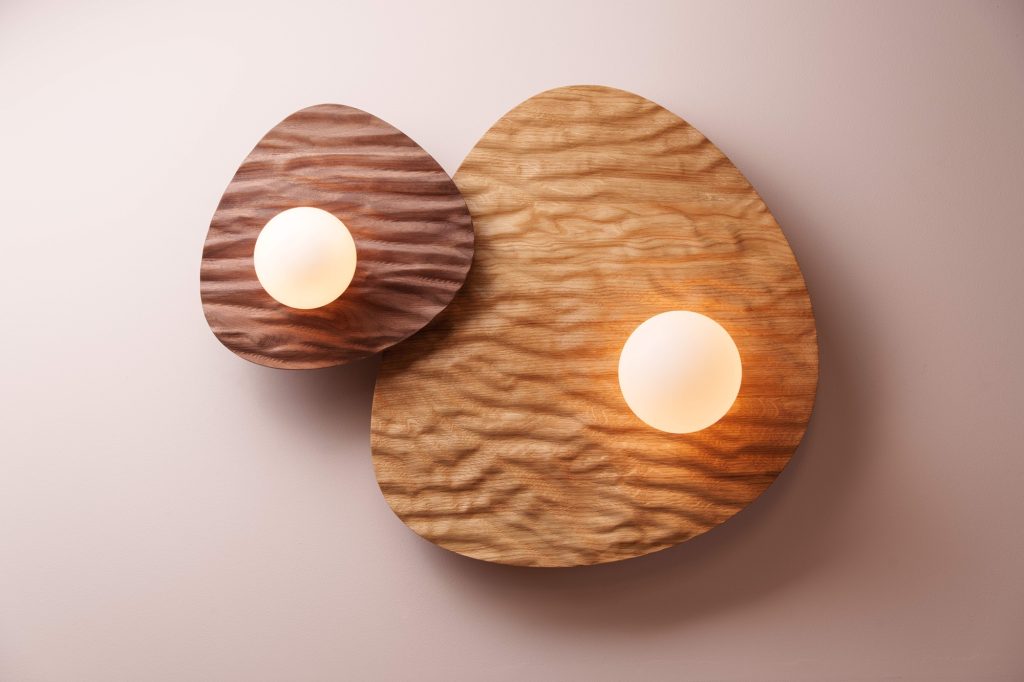
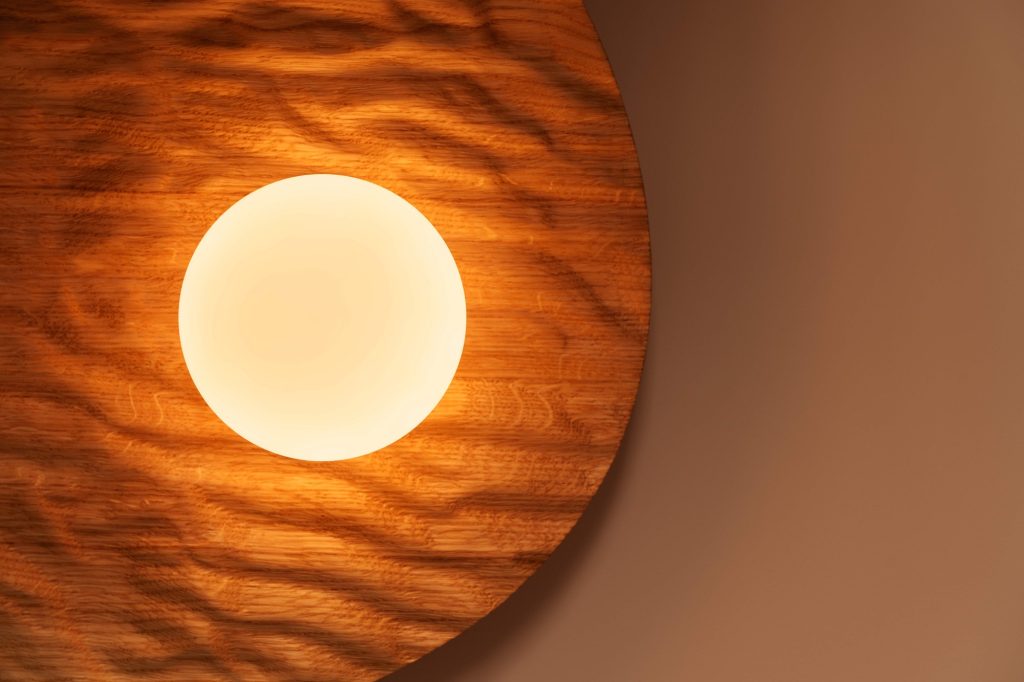
‘We are based down in Cornwall, with everything made here in our UK studio. At this year’s Clerkenwell we are exhibiting our new ‘Sandscape’ lighting collection. The inspiration for this product came from the ripples in the sand from our local beaches. They are available in oak, walnut as well as ceramic, with a matt speckled glaze. The g9 light source is diffused by an opal glass bowl. We have a few different ripple patterns and sizes, so you can overlay them, choose different materials and create your own sandscape installation’.
This product would look great in any beachside café, bar, somewhere in the South of France maybe, Cap Ferrat as you sip your Aperol Spritz…. Damn it I think I need a holiday!
.
.
I am going to make an exception just this once, because even though the pendants below, which I liked, wasn’t shown (due to awful problems at customs) its sister, floor-standing, version uses the same manufacturing process – but it’s not really to my taste. Getting products into the country has been made so much more difficult since… well the B word, and I don’t want good sustainable design to suffer because of it.


North-South Art and Design is a company that seeks to bridge the gap between high end aesthetics and sustainability. One of the founders, Trivi took the time out to speak to us. ‘We are a lighting and furniture company selling luxury products. The main gap in the market we observed when we founded the company, is that people struggled to find a product that was sustainable, and aesthetically pleasing. We provide products where the aesthetic value is not compromised but are also very sustainable.’
‘All our products are dyed naturally using vegetables, roots, and seeds. We also use natural leaf polish, that reacts with natural dyes, avoiding any chemicals and creating the polished finish. We have been inspired by the South Indian art of toy making’.
‘The product inspiration behind Kol is a dance form from South India called Kollatam, a folk-dance involving sticks and clapping. The design captures the essence of that energy, transforming a moment of motion into a refined lighting piece. The Wood used is all sustainable because we don’t want our products to result in any deforestation, our technique works by harvesting the tree in a crisscross way called coppicing that doesn’t take the roots away from the plant so the plant regenerates’.
The company appeared to be open to bespoke changes should need (for example the Kol Pendant could be a wall light if you wished) which is great, because, let’s face it, we all know how lighting designers like a tweak or two; myself included !
.
.
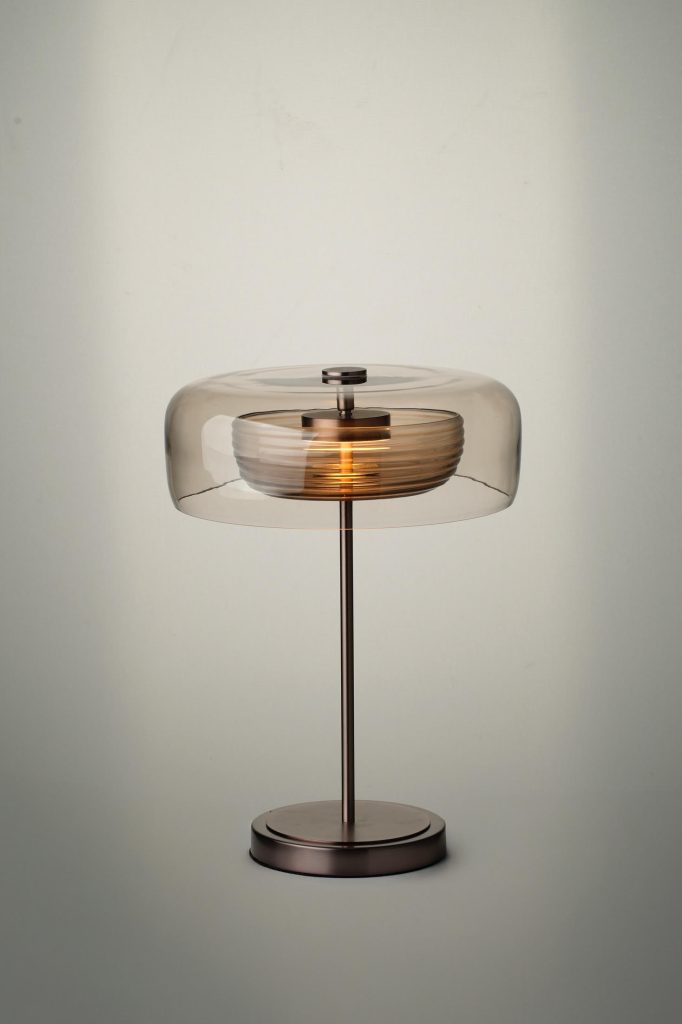
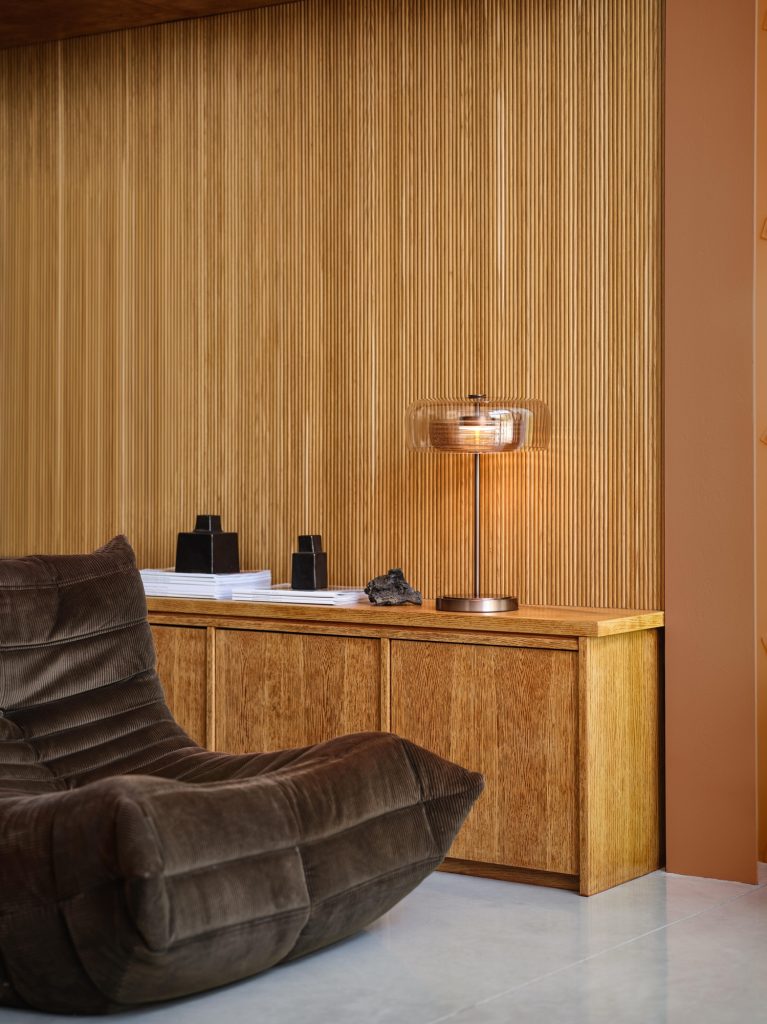
As I was leaving the show, I noticed this lighting beauty. Despite the sunny weather and my desperation to leave, (I mean who knows when it will be this sunny again, it is England after all), its appearance compelled me to return to the dungeon… so all I can say is it must be good!
‘Managing director of Industville, Mara Miller told us a bit about the inspiration behind the design.
‘This luminaire, inspired by the lights of the1920s, includes a table lamp and pendant. We modernized the classic shape with layered glass and trendy bronze, giving a modern take on the last century design. All our products are made from recycled metal, we use partially recycled glass’.
The inner shade is ribbed so reflects internally on the double layers, forming lovely striations of light, creating an optical illusion which makes you look twice; just a great product.

.
.
.
Another standout feature of this year’s exhibition was the evident push toward innovation paired with environmental responsibility. It’s clear that sustainability has become a major driver in the lighting industry, not just as a trend but as a necessity. Beyond the products themselves, there is also an emerging ethos among designers and manufacturers to create lighting solutions that serve both form and function while making strides to reduce carbon footprints.
In addition, the sheer creativity on display was awe-inspiring. From modular systems to 3D printed materials, the lighting scene continues to evolve in ways that break free from convention. The contrast between cutting-edge technology and the historic venue added layers of intrigue, reminding us how tradition and modernity can coexist beautifully in design.