

Interesting insights in lighting design can often come from outside the lighting field, from other areas in the creative industry. In my role as Design Editor for The Light Review, I have interviewed various designers over the past few years, including Kar-Hwa Ho, Head of Interior Architecture at Zaha Hadid, and Axel Schmid, Head of Product Design at Ingo Maurer, with conversations that have frequently revealed new and noteworthy perspectives, so I was thrilled to be able to speak with Kelly Hoppen CBE about this subject and her design for the WOW! house 2025, lucky indeed given her packed schedule filming a new television series and all her other design commitments.
Known for a design style that is ‘synonymous with timeless elegance and a distinct fusion of East and West aesthetics’ Kelly is one of the most sought-after designers of her generation, with thousands of projects over the last four decades with Kelly Hoppen Interiors.
.

.

.
CF: I am interested to know your approach to any lighting design project. Do you follow the principles of Richard Kelly, or do you have your own unique design approach?
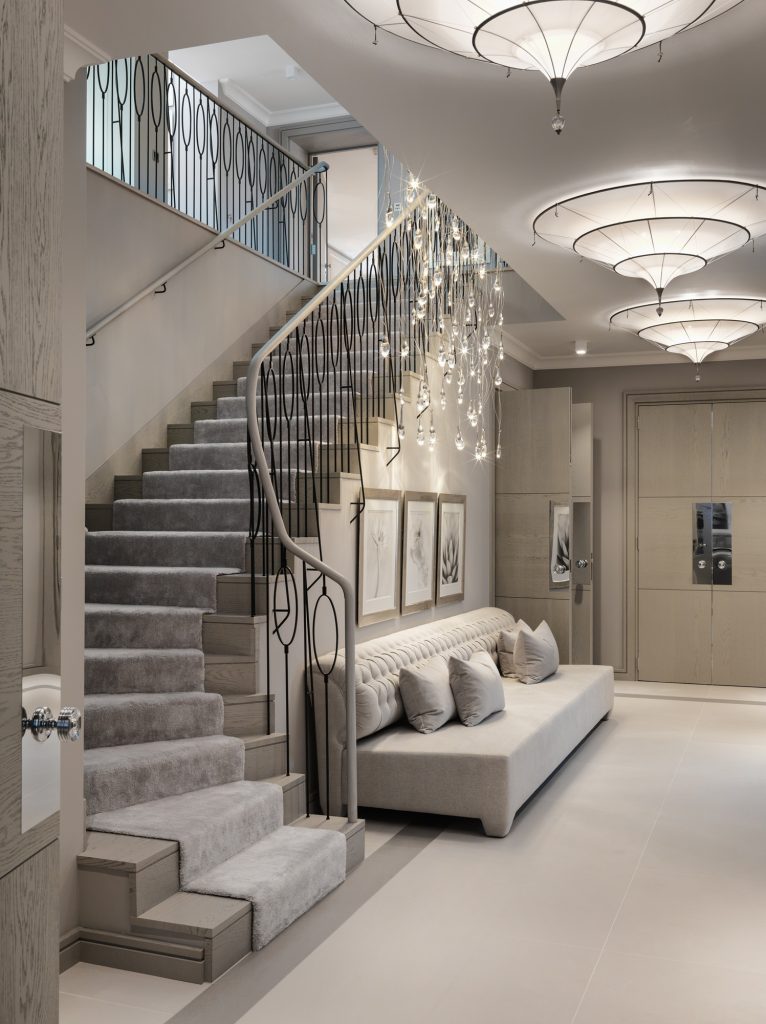
KH: Lighting is everything. It is one of the most dynamic and essential tools in interior design. It should never be an afterthought. It needs to be mapped out from the very beginning, directly onto floor plans and elevations. I consider exactly where beams and washes of light will fall, how they will interact with surface materials, and how the lighting needs to evolve across different times of day or zones of use.
That said, I believe in layering. Task, mood and statement lighting should all work in harmony. But I do not follow fixed rules. I work instinctively, while being very precise about placement and proportion. Every circuit, beam angle, height and dim level matters. When lighting is planned with this level of detail, it stops being background and becomes atmosphere, texture and theatre.
.
.
CF: When considering a space, how important is the actual aesthetic of the product compared with the lit effect of the space, and how do you blend these two design elements in your approach to interiors?
KH: They are equally important. I do not believe you should have to choose between a beautiful object and the atmosphere it creates. Lighting should look like it belongs. It should be sculptural, elegant and purposeful.
In the WOW! house living room, we worked with Visual Comfort to find pieces that added visual interest and also cast beautiful, directional light. For example, we pierced the ‘Clemente‘ light through a screen, and turned the ‘Boxie‘ light upside down. They were playful placements, but still felt considered and balanced. For me, it is about layering light in a way that feels effortless but is deeply intentional.
.

.
CF : The look and feel of the lighting for your WOW living room feels dramatic without being overbearing. How difficult is it to mix these strong finishes in lighting products with the overall look and feel of a space that is relaxing and sophisticated?
KH: It is definitely a balancing act, but it is something I really enjoy. The space has a lot of strong features like the panelling, bold textures and sculptural forms, yet it still feels calm. That is because everything works together in harmony. Lighting was key to that feeling.
We used multiples of the same fixtures but placed them in different ways. Some were recessed, some wall-mounted, some almost hidden. The result was sculpted, soft lighting that enhanced the room without overwhelming it. The trick is knowing when to let a material or finish be the focus, and when to hold back. My goal was always to create a space that makes people feel comfortable, grounded and inspired.
.

Photo James McDonald1202
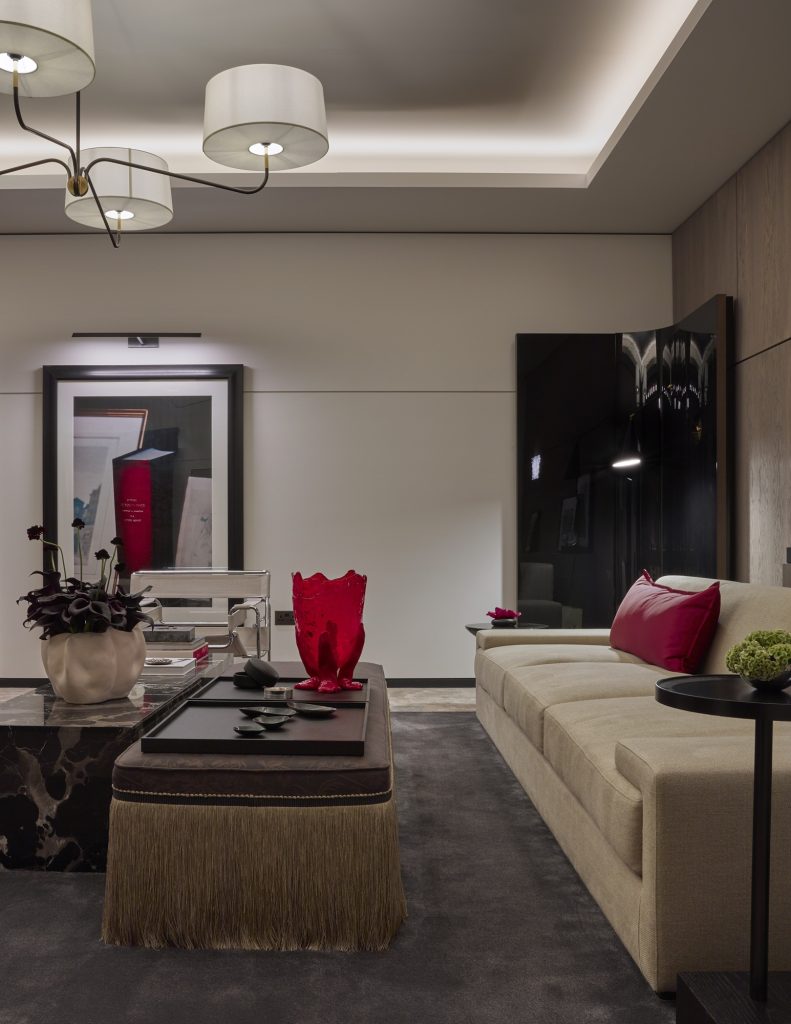
Photo James McDonald1179
.
CF: In this world of post-halogen, incandescent, how important is light quality for you? The dull LEDs of 10 years ago have improved immensely, but my bugbear is the saturation. When specifying products, what is your minimum requirement or does it not matter?
KH: Oh, it absolutely matters. I am very selective about light quality. Bad lighting can ruin the atmosphere of a room in an instant. You can have the most beautiful fabrics or artworks, but if the colour temperature or rendering is off, the whole space falls flat.
I always test how the light interacts with different surfaces. For me, it must be warm, flattering and true to tone. It is not about technical specifications just for the sake of it. It is about making sure the space feels alive and never sterile.
.
CF: What LED sources did you use for the WOW house? And you mentioned a three-way dimming system. What type of technology did you opt for? How important is user interaction?
KH: We worked closely with Visual Comfort, and all of the fittings used high-quality LED sources that allow for both warmth and dimmability. The three-way dimming was essential. It lets the room shift naturally from day to evening, from vibrant to intimate.
We kept the user interaction simple. That is really important, especially in residential design. People do not want a system that feels complicated or intrusive. They want to walk in, feel relaxed and instantly know how to set the mood. The best lighting schemes are the ones where the technology disappears, and the atmosphere takes over.
.
